
Overview & Design Features
The GM Northstar L37 is a high-performance, 4.6-liter dual-overhead-cam (DOHC) V8 engine developed by General Motors specifically for its luxury Cadillac division. Introduced in 1993, this powerplant represented GM’s technological showcase, engineered to compete directly with sophisticated European and Japanese luxury imports. As the high-output flagship of the Northstar engine family, the L37 was primarily designed for transverse front-wheel-drive configurations, delivering sports-car-like performance within premium luxury platforms.
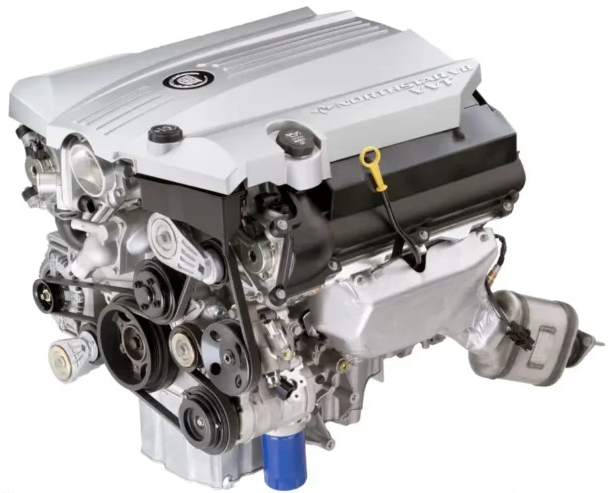
Constructed with an all-aluminum 90-degree cylinder block and aluminum cylinder heads, the L37 utilized cast-iron cylinder liners to ensure structural durability. The engine featured sequential port fuel injection and a dual-overhead camshaft design operating four valves per cylinder. A notable engineering innovation was the “limp-home” fail-safe cooling system, which allowed the engine to run temporarily without coolant by alternating cylinder banks to air-cool the block, preventing catastrophic thermal failure.
The Northstar L37 was deployed in Cadillac’s top-tier performance trims. Key applications included the Cadillac Eldorado Touring Coupe (ETC) from 1993 to 2002, the Cadillac Seville Touring Sedan (STS) from 1993 to 2004, and the Cadillac DTS Performance package from 2006 to 2011. It was also utilized in the Buick Lucerne Super from 2008 to 2011.
Technical Specifications
| Displacement (cc) | 4,565 cc (4.6 Liters) |
| Max Power (hp (kW) @ RPM) | 300 hp (224 kW) @ 6000 RPM |
| Max Torque (Nm (kg*m) @ RPM) | 400 Nm (40.8 kg*m) @ 4400 RPM |
| Fuel Type | Premium Unleaded Gasoline (91 Octane) |
| Fuel Consumption (l/100 km) | 13.1 l/100 km (combined average) |
| Engine Type | 90-degree V8, Liquid-cooled |
| Compression Ratio | 10.3:1 |
| Cylinder Bore (mm) | 93.0 mm |
| Piston Stroke (mm) | 84.0 mm |
| Valvetrain | Double Overhead Camshaft (DOHC), Chain Drive |
| Valves per Cylinder | 4 (32 valves total) |
| Additional Info | Features fail-safe “limp-home” cooling mode |
Common Problems & Reliability
While technologically advanced, the Northstar L37 is associated with several well-documented mechanical weaknesses. The most critical failure point involves the cylinder head bolts. Due to a combination of dissimilar metal expansion rates and fine thread pitches in the aluminum block, the head bolt threads can strip over time, leading to head gasket failure. This issue is highly prevalent in pre-2004 model years before GM updated the design to coarser, longer head bolts.
Another common vulnerability is the multi-piece crankcase design, which frequently develops oil leaks at the block split-line (crankcase half seals). Repairing this leak requires complete engine removal. Additionally, these engines are prone to carbon buildup on the piston crowns, causing a metallic knocking noise known as “carbon rap.” Despite these challenges, an L37 engine that receives diligent preventative maintenance can achieve a service life of 150,000 to 200,000 miles before requiring a major overhaul.
Maintenance Tips & Service Schedule
To preserve the structural integrity of the aluminum block and prevent thermal stress, strict adherence to a specialized maintenance schedule is required. The cooling system is the most critical component to monitor; coolant flushes must be performed every 2 years or 30,000 miles using high-quality Dex-Cool or equivalent coolant mixed with distilled water to prevent corrosion.
- Engine Oil: Change the engine oil every 5,000 miles using premium 5W-30 viscosity oil to ensure proper lubrication of the dual overhead cam assemblies.
- Spark Plugs: Replace the platinum-tipped spark plugs every 100,000 miles.
- Timing Chains: The three-chain timing system is designed to last the lifetime of the engine, but the tensioners and guides should be inspected for wear at 120,000 miles.
- Carbon Mitigation: Periodic wide-open-throttle acceleration (where safe) is recommended to burn off carbon deposits from the combustion chambers.
Conclusion
The GM Northstar L37 is a sophisticated V8 engine that offers impressive power and smooth delivery, but it demands meticulous maintenance. For a used vehicle buyer, purchasing an L37-equipped vehicle carries significant financial risk unless there is documented proof that the head gaskets and block threads have been repaired using upgraded studs (such as Northstar Performance studs or Time-Sert inserts). Without this verified work, the L37 remains a risky choice for budget-conscious enthusiasts.