
Overview & Design Features
The GM LG4 engine is a 5.0-liter (305 cubic inch) naturally aspirated V8 engine that reflects a pivotal era in General Motors’ corporate history. Developed primarily by the Chevrolet division, this powerplant was widely shared across GM’s passenger car divisions, including Cadillac and Oldsmobile, during the late 1970s and 1980s. This strategic engine-sharing initiative aimed to standardize manufacturing while providing reliable, low-end torque for heavy, full-size luxury rear-wheel-drive platforms. It remains a notable example of GM’s transition from purely mechanical designs to early computer-integrated engine management.
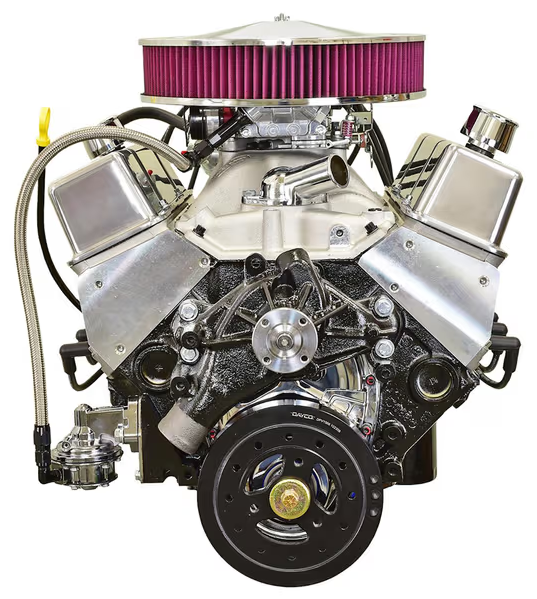
Constructed with a heavy-duty cast-iron cylinder block and cast-iron cylinder heads, the LG4 was engineered for structural longevity rather than high-RPM performance. The valvetrain utilizes a traditional overhead valve (OHV) pushrod design with two valves per cylinder. Fuel delivery is handled by a Rochester Quadrajet four-barrel carburetor. In later production years, this setup was upgraded to the Computer Command Control (CCC) system, which utilized an electronic mixture control solenoid to dynamically adjust the air-fuel ratio based on oxygen sensor feedback. This engine does not feature modern variable valve timing or direct injection, relying instead on a conventional timing chain setup.
The LG4 engine and its closely related corporate derivatives were utilized in several premium GM vehicles. Within the Cadillac brand, this engine family served as a reliable powertrain option for the Cadillac Fleetwood Brougham from 1986 to 1990. It was also widely deployed in flagship models from other GM divisions, including the Oldsmobile Custom Cruiser, the Buick Electra, and the Chevrolet Caprice Classic, typically paired with the robust Turbo-Hydramatic 200-4R four-speed automatic transmission.
Technical Specifications
| Specification | Value |
|---|---|
| Displacement (cc) | 5,033 cc (305.1 cu in) |
| Max Power (hp (kW) @ RPM) | 140 hp (104 kW) @ 3,200 RPM |
| Max Torque (Nm (kg*m) @ RPM) | 339 Nm (34.6 kg*m) @ 2,000 RPM |
| Fuel Type | Gasoline (Unleaded) |
| Fuel Consumption (l/100 km) | Approximately 14.0 l/100 km (combined) |
| Engine Type | 90-degree V8, naturally aspirated |
| Compression Ratio | 8.6:1 |
| Cylinder Bore (mm) | 94.9 mm |
| Piston Stroke (mm) | 88.4 mm |
| Valvetrain | OHV (Overhead Valve), pushrod, timing chain |
| Valves per Cylinder | 2 |
| Additional Info | Features Rochester Quadrajet E4ME electronic carburetor |
Common Problems & Reliability
- Electronic Carburetor Calibration: The primary weak point of this engine is the Rochester Quadrajet E4ME electronically controlled carburetor. This hybrid mechanical-electronic system is highly complex and difficult to calibrate. Over time, worn throttle shaft bushings, failing mixture control solenoids, and deteriorating internal gaskets lead to rough idling, engine hesitation, and severe drops in fuel economy.
- Vacuum Line Complexity: The extensive network of vacuum lines required for emission controls is prone to dry-rotting and cracking, resulting in vacuum leaks that disrupt engine sensors and degrade driveability.
- Camshaft Wear: Early production units with flat-tappet camshafts also face premature lobe wear if operated without high-zinc lubrication.
Despite these auxiliary component issues, the cast-iron engine block, crankshaft, and pistons are incredibly robust. With proper care, the core mechanical components of this engine can easily achieve a service life of 250,000 to 300,000 miles (400,000 to 480,000 km) before requiring a major overhaul.
Maintenance Tips & Service Schedule
- Oil Changes: Routine oil changes must be performed every 3,000 to 5,000 miles (5,000 to 8,000 km). It is highly recommended to use a 10W-30 or 10W-40 viscosity motor oil. For older flat-tappet camshaft configurations, a zinc-rich (ZDDP) additive should be added to the engine oil during every service to prevent premature valvetrain wear.
- Spark Plugs: Standard copper spark plugs should be replaced every 30,000 miles (48,000 km) to maintain optimal ignition performance.
- Timing Chain: The timing chain and its corresponding gears should be inspected and replaced near the 100,000-mile (160,000 km) mark, as the original nylon-coated silent cam gears tend to degrade over time.
- Cooling System: The cooling system requires a complete flush and coolant replacement every 24 months to prevent rust and scale accumulation inside the cast-iron engine block passages.
Conclusion
The GM LG4 5.0-liter V8 engine is a highly reliable, low-stressed powerplant that offers excellent mechanical durability. For a used vehicle buyer or classic car enthusiast, it represents a solid purchase option, provided the buyer is comfortable dealing with or converting the complex vacuum networks and electronic carburetion systems of the 1980s.