
Overview & Design Features
The Cadillac LXH is a 3.0-liter, twin-turbocharged V6 engine, a prominent member of General Motors’ advanced High-Feature V6 engine family. Engineered by Cadillac, this powertrain represents a significant commitment to delivering both robust performance and refined driving dynamics within its luxury vehicle lineup. It is designed with a focus on instantaneous throttle response, high power output for its displacement, and efficiency, embodying a modern approach to forced induction in the premium segment. Its introduction marked a strategic shift towards more compact, yet powerful, engines for Cadillac’s sportier offerings.
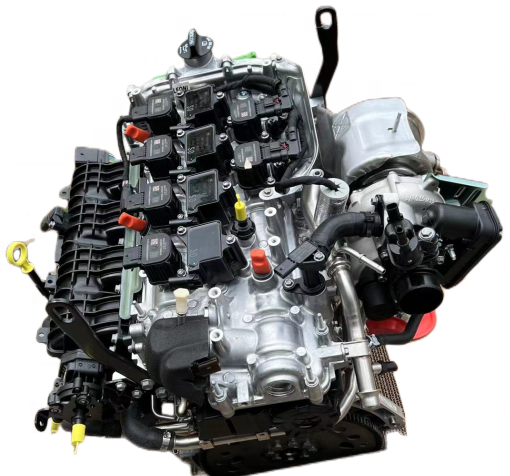
At its core, the LXH engine features an all-aluminum construction for both the cylinder block and cylinder heads, contributing to reduced overall vehicle weight and improved thermal management. It employs a sophisticated direct fuel injection (DI) system, which precisely atomizes fuel directly into the combustion chamber, enhancing fuel efficiency and maximizing power output. Key technologies include actively managed variable valve timing (VVT) on both intake and exhaust camshafts, optimizing valve overlap and lift for various RPMs and loads, and twin-scroll turbochargers for each bank of cylinders to minimize turbo lag. Furthermore, the engine incorporates Active Fuel Management (AFM), also known as Cylinder Deactivation, which can temporarily shut down cylinders under light load conditions to improve fuel economy.
This specific iteration of the 3.0L twin-turbo V6 engine, the LXH, was primarily deployed in select Cadillac performance models. Its initial application included the Cadillac CT4-V, produced from the 2020 model year onwards, and the Cadillac CT5-V, which also debuted in the 2020 model year. The engine serves as the standard high-performance option for these V-Series variants, distinguishing them within their respective model ranges.
Technical Specifications
| Specification | Value |
|---|---|
| Displacement (cc) | 2997 |
| Max Power (hp (kW) @ RPM) | 360 (268) @ 5400 (CT5-V) |
| Max Torque (Nm (kg*m) @ RPM) | 549 (56) @ 2400-4400 (CT5-V) |
| Fuel Type | Premium Unleaded (91+ RON) |
| Fuel Consumption (l/100 km) | 10.7 (Combined, CT5-V AWD) |
| Engine Type | Twin-Turbocharged V6 |
| Compression Ratio | 10.0:1 |
| Cylinder Bore (mm) | 86.0 |
| Piston Stroke (mm) | 85.8 |
| Valvetrain | DOHC, VVT |
| Valves per Cylinder | 4 |
| Additional Info | Direct Injection, Active Fuel Management (AFM), Twin-scroll Turbos |
Common Problems & Reliability
While the Cadillac LXH engine is generally robust, certain characteristics and potential issues are notable. As with many direct injection engines, carbon buildup on the intake valves can occur over time. This buildup, resulting from the absence of fuel washing over the valve stems, can lead to reduced airflow, decreased performance, and rough idling if not addressed. Regular use of top-tier gasoline and occasional fuel system cleaners can mitigate the rate of buildup, but mechanical cleaning (walnut blasting) may be necessary at higher mileages.
Another area of consideration involves the Active Fuel Management (AFM) system, which employs special lifters to deactivate cylinders. While modern GM AFM systems are more reliable than earlier iterations, issues such as collapsed lifters or solenoid failures can still arise, potentially leading to misfires, ticking noises, and costly repairs. Vigilant oil change intervals with specified lubricants are critical for AFM longevity.
Given its twin-turbocharged nature, the turbos themselves are components subject to high heat and stress. Potential long-term issues could include wastegate actuator wear, minor oil leaks from turbo seals, or, in rare cases, turbocharger failure, particularly if the engine has been subjected to aggressive driving without proper cool-down periods or if oil changes have been neglected. Under proper and consistent maintenance, including the use of manufacturer-specified synthetic oils, the LXH engine can realistically achieve a service life exceeding 150,000 to 200,000 miles before requiring major internal overhauls.
Maintenance Tips & Service Schedule
Maintaining the Cadillac LXH engine according to manufacturer specifications is paramount for ensuring its long-term reliability and performance. Regular oil changes are critical; synthetic oil meeting the Dexos 2 specification (or later) with a viscosity of 5W-30 is typically recommended. Intervals are generally every 7,500 miles or 12 months, whichever comes first, but driving conditions and vehicle usage should always be considered. Shorter intervals may be beneficial for sustained aggressive driving.
Spark plugs should be replaced every 60,000 miles (approximately 100,000 km) to maintain optimal combustion efficiency. The timing chain system is designed for the life of the engine under normal operating conditions, but inspection for excessive stretch or noise should be considered at higher mileages (e.g., 150,000 miles). Coolant flushes are typically recommended every 5 years or 100,000 miles, using Dex-Cool extended-life coolant. Air filter replacement should occur annually or every 15,000-30,000 miles, depending on driving environment.
For direct injection engines, incorporating a quality fuel system cleaner into the fuel tank every few oil change cycles can help to keep injectors clean and mitigate carbon buildup on the intake valves. Transmission fluid and brake fluid service intervals should also be adhered to as per the vehicle’s specific maintenance schedule, as these contribute to the overall health and operation of the powertrain system.
Conclusion
The Cadillac LXH engine stands as a well-engineered, high-performance V6 that offers an excellent balance of power, refinement, and modern efficiency. For a used vehicle buyer, it represents a generally reliable choice, provided that its previous ownership history reflects diligent adherence to the recommended maintenance schedule. Its advanced technologies, such as direct injection, VVT, and twin-turbocharging, contribute to its strong performance but also necessitate specific maintenance considerations. With consistent premium fuel usage, timely oil changes with specified synthetic lubricants, and proactive attention to potential DI-related carbon buildup or AFM issues, the LXH engine can deliver many miles of engaging and trouble-free driving experience in a Cadillac vehicle.