
Overview & Design Features
The Cadillac GM Oldsmobile LF9, more accurately identified by its RPO code LC3 in most documentation, is a specialized, supercharged variant of the renowned Northstar V8 engine family. Developed by General Motors for its high-performance Cadillac V-series vehicles, this engine boasts a displacement of 4.4 liters (4371 cc) in a V8 configuration. It represents a significant engineering achievement for Cadillac, delivering substantial power and torque figures designed to rival European luxury performance sedans and roadsters. Its deployment marked a period of intensified focus on performance within the Cadillac brand, offering a sophisticated blend of luxury and aggressive power delivery that defined the V-series ethos.
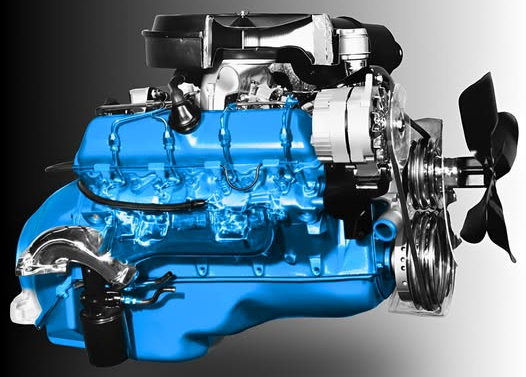
Engineered for forced induction, the LF9 (LC3) features a robust cast aluminum cylinder block and heads, providing an optimal balance of strength and weight reduction. It employs a dual overhead camshaft (DOHC) valvetrain with four valves per cylinder, totaling 32 valves, enhancing volumetric efficiency. A key feature is the Eaton M122 Roots-type supercharger, integrated with an intercooler, which dramatically increases air intake density for heightened performance. Fuel delivery is managed by a sequential port fuel injection (SPFI) system, precisely controlled by an advanced electronic throttle. Continuously Variable Valve Timing (CVVT) is utilized on both intake and exhaust camshafts, optimizing valve overlap for improved power delivery across the RPM range and enhanced fuel efficiency.
This potent engine was primarily deployed in Cadillac’s high-performance V-series models. Specific applications include the Cadillac STS-V, produced from 2006 to 2009, and the Cadillac XLR-V, also manufactured from 2006 to 2009. Both vehicles utilized this supercharged 4.4L Northstar V8 to deliver exceptional performance within their respective segments, embodying Cadillac’s pursuit of high-end luxury and dynamic driving characteristics.
Technical Specifications
| Specification | Value |
|---|---|
| Displacement (cc) | 4371 cc (4.4L) |
| Max Power (hp (kW) @ RPM) | 469 hp (345 kW) @ 6400 RPM |
| Max Torque (Nm (kg*m) @ RPM) | 574 Nm (58.5 kg*m) @ 3900 RPM |
| Fuel Type | Premium Unleaded (91+ RON) |
| Fuel Consumption (l/100 km) | ~14.7 (Combined, Cadillac XLR-V) |
| Engine Type | Supercharged DOHC V8 |
| Compression Ratio | 9.0:1 |
| Cylinder Bore (mm) | 93.0 mm |
| Piston Stroke (mm) | 81.0 mm |
| Valvetrain | DOHC, Continuously Variable Valve Timing (CVVT) |
| Valves per Cylinder | 4 (32 total) |
| Additional Info | Eaton M122 Roots-type supercharger with intercooler, Cast Aluminum Block and Heads |
Common Problems & Reliability
While a powerful and sophisticated engine, the LF9 (LC3) shares some characteristic issues with the broader Northstar V8 family, compounded by the stresses of forced induction. A primary concern involves head bolt thread failure, where aluminum block threads can strip, leading to head gasket leaks and overheating. This is a common and potentially costly repair requiring specialized thread repair kits (e.g., Northstar Performance Studs). Secondly, oil leaks are frequently observed, particularly from the valley cover, oil pan, and rear main seal. These leaks can be persistent and, if left unaddressed, may lead to low oil levels and component damage.
The integrated Eaton M122 supercharger also requires attention. The supercharger isolator coupler can wear out, causing a rattling noise from the supercharger snout. Furthermore, supercharger oil levels should be regularly checked and changed, as low oil or contamination can lead to bearing failure. Coolant leaks from the plastic crossover pipe at the rear of the engine are also a known failure point. With diligent maintenance and proactive address of these known issues, the LF9 (LC3) can achieve a service life of 150,000 to 200,000 miles (240,000 to 320,000 km) before requiring a major overhaul. However, ignoring the common Northstar-specific problems can significantly shorten its lifespan.
Maintenance Tips & Service Schedule
Maintaining the LF9 (LC3) engine proactively is crucial for its longevity and performance. Engine oil and filter changes should be performed every 5,000 miles (8,000 km) or every 6 months, using a high-quality full synthetic 5W-30 motor oil that meets GM’s dexos1™ specifications. This interval is critical for supercharged engines operating under higher thermal loads. Spark plugs, typically Iridium-tipped, should be replaced every 50,000 to 60,000 miles (80,000 to 96,000 km) to maintain optimal ignition performance and fuel efficiency.
The engine utilizes a timing chain system, which is generally designed for the life of the engine. However, at higher mileages (e.g., 150,000 miles / 240,000 km), inspection for chain stretch and guide wear during other major service operations is advisable. The cooling system requires attention; a complete coolant flush and refill with GM-approved Dex-Cool antifreeze should be performed every 5 years or 100,000 miles (160,000 km). Furthermore, the supercharger oil should be checked and topped up as per manufacturer recommendations, typically requiring replacement at approximately 100,000 miles (160,000 km) or if unusual noises are present. Regular inspection for oil and coolant leaks is paramount, addressing them promptly to prevent more significant damage.
Conclusion
The Cadillac LF9 (LC3) 4.4L Supercharged Northstar V8 offers an exhilarating driving experience characterized by robust power delivery and sophisticated engineering. For a used vehicle buyer, it presents a compelling performance package. However, its complex nature and inherited Northstar family weaknesses mean it is not a low-maintenance engine. Prospective buyers must be fully aware of the potential for costly repairs, particularly concerning head bolt issues and oil leaks, which can significantly impact ownership costs. A thorough pre-purchase inspection by a mechanic familiar with Northstar engines is highly recommended. While capable of impressive longevity with diligent and specialized care, this engine is best suited for enthusiasts prepared for specific maintenance demands and potential repairs, rather than budget-conscious consumers seeking minimal upkeep.