
Overview & Design Features
The GM L35 engine is a V6 power unit developed by General Motors, recognized for its durability as a workhorse in various light trucks and SUVs. The designation “Cadillac GM L35” broadly reflects its parent company’s engineering scope, though the L35 itself primarily served across GM’s Chevrolet and GMC divisions. Introduced in the early 1990s, this 4.3-liter (4294 cc) 90-degree V6 engine was an evolution from its predecessors, balancing power, torque, and reliability for utility vehicles.
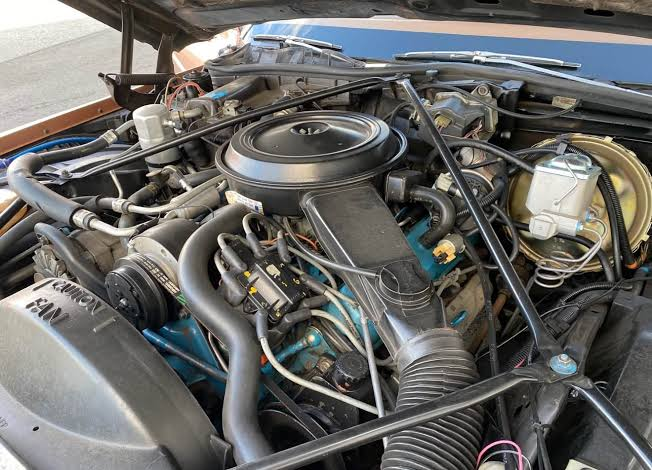
Engineered with a robust foundation, the L35 features a cast iron cylinder block and cast iron cylinder heads, ensuring structural integrity and longevity under demanding conditions. Its valvetrain utilizes an Overhead Valve (OHV) pushrod design, characteristic of GM’s small-block V8s, from which the L35 derived much of its architecture by removing two cylinders. Early L35 versions primarily employed Central Port Injection (CPI), a unique multi-point fuel injection system designed to improve fuel atomization and emissions. This design balanced performance and fuel efficiency, eschewing complex variable valve timing technologies.
The GM L35 engine was widely deployed across General Motors’ light truck and SUV lineup from approximately the 1992 through 2002 model years. Key vehicles utilizing this engine include the Chevrolet S-10 pickup, Chevrolet Blazer SUV, Chevrolet Astro van, and light-duty Chevrolet Silverado models. Similarly, it powered the GMC Sonoma pickup, GMC Jimmy SUV, GMC Safari van, and light-duty GMC Sierra models. The engine also found applications in vehicles like the Oldsmobile Bravada and the Isuzu Hombre, showcasing its versatility across GM brands, but not typically in Cadillac’s mainstream North American vehicle offerings.
Technical Specifications
| Specification | Value |
|---|---|
| Displacement (cc) | 4294 cc (4.3 L) |
| Max Power (hp (kW) @ RPM) | 190 hp (142 kW) @ 4400 RPM |
| Max Torque (Nm (kg*m) @ RPM) | 340 Nm (34.7 kg*m) @ 2800 RPM |
| Fuel Type | Gasoline (Regular Unleaded) |
| Fuel Consumption (l/100 km) | 13.5 – 16.0 l/100 km (combined, varies by vehicle) |
| Engine Type | V6, 90-degree, Overhead Valve (OHV) |
| Compression Ratio | 9.1:1 – 9.2:1 |
| Cylinder Bore (mm) | 101.6 mm |
| Piston Stroke (mm) | 88.4 mm |
| Valvetrain | Pushrod |
| Valves per Cylinder | 2 |
| Additional Info | Derived from Chevrolet Small Block V8; Central Port Injection (CPI) standard. |
Common Problems & Reliability
Despite its reputation for robustness, the GM L35 engine is prone to several common issues. A frequent mechanical weak point involves the lower intake manifold gaskets (LIM), prone to degradation leading to external or internal coolant leaks that can contaminate oil, causing overheating or damage if not addressed. Another prevalent concern stems from the Central Port Injection (CPI) “spider” unit. Its intricate poppet valves and fuel lines can clog or fail, resulting in misfires, rough idling, decreased fuel efficiency, and an illuminated “Check Engine” light. Replacement of the entire spider assembly is often necessary.
Additionally, issues with the distributor and its gear are not uncommon. Wear on the distributor gear, often due to insufficient lubrication or material fatigue, can lead to incorrect ignition timing, misfires, and engine stalls. Regular inspection and lubrication are critical to mitigation. Though not commonly failing prematurely, extended service intervals without proper oil changes can accelerate timing chain and tensioner wear, causing slack and performance degradation. With diligent maintenance, including timely oil changes and addressing common issues proactively, the GM L35 engine can reliably achieve service lives exceeding 200,000 to 250,000 miles (approximately 320,000 to 400,000 km) before requiring a major overhaul.
Maintenance Tips & Service Schedule
Ensuring the longevity and optimal performance of the GM L35 engine requires disciplined maintenance. Engine oil changes are paramount: replace the oil and filter every 3,000 to 5,000 miles (5,000 to 8,000 km) or every 6 months, using a 5W-30 conventional or synthetic blend motor oil. This practice is crucial for minimizing internal component wear, especially the distributor gear. Spark plugs should be inspected and replaced with platinum-tipped plugs every 60,000 to 100,000 miles (100,000 to 160,000 km) for efficient combustion. The engine coolant, particularly GM’s Dex-Cool (orange), requires a system flush and refill every 5 years or 100,000 miles (160,000 km); during service, inspect lower intake manifold gaskets for leakage. The fuel filter should be replaced every 30,000 miles (50,000 km), and the PCV valve inspected/replaced every 30,000 to 50,000 miles (50,000 to 80,000 km) to maintain proper crankcase ventilation.
Conclusion
The GM L35 engine stands as a testament to General Motors’ philosophy for dependable utility vehicle powerplants. While specific vulnerabilities exist, notably lower intake manifold gaskets and the Central Port Injection system, these issues are well-documented and resolvable. For a used vehicle buyer, an L35-equipped vehicle can be a safe and reliable choice, provided a pre-purchase inspection confirms previous diligent maintenance and addresses any existing common faults. An engine with a complete service history and evidence of regular fluid changes typically indicates a unit capable of many more years of robust service, particularly if common failure points have been addressed. Its simple, durable design, coupled with widespread parts availability, makes it a practical option for those seeking an economical and capable powertrain.