
Overview & Design Features
The Cadillac Z19DTR is a compact, high-performance diesel engine developed by General Motors, primarily for its European market offerings. With a displacement of 1910 cubic centimeters, this inline-four turbocharged diesel unit represents a significant engineering effort to deliver robust power and torque within a fuel-efficient package. It is notable for its twin-turbocharger setup, which was advanced for its time, providing a broad power band and refined driving experience. This engine underscores Cadillac’s foray into the competitive European premium diesel segment, aiming to combine American luxury with European efficiency standards.
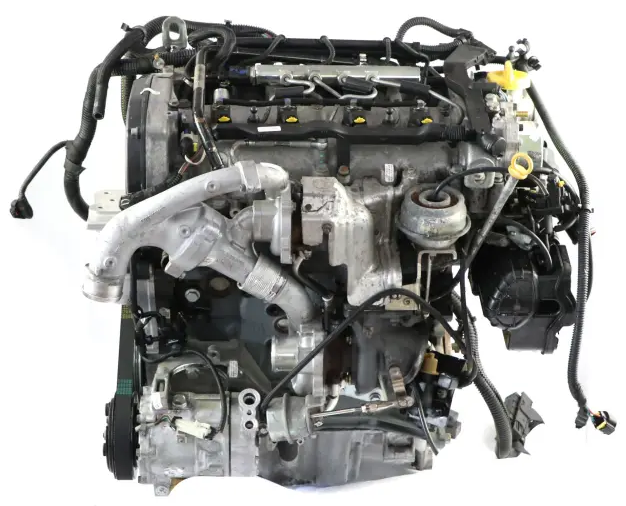
Engineered for durability and performance, the Z19DTR features a cast-iron cylinder block for structural rigidity and an aluminum cylinder head to reduce overall weight and improve thermal management. It employs a common rail direct injection fuel system, operating at high pressures to precisely meter fuel for optimal combustion efficiency and reduced emissions. The valvetrain utilizes a Double Overhead Camshaft (DOHC) design, actuating four valves per cylinder, promoting efficient intake and exhaust gas flow. Its most distinctive feature, the sequential twin-turbocharging system, consists of a smaller turbo for quick spool-up at lower RPMs and a larger turbo that engages at higher RPMs for peak power, minimizing turbo lag across the rev range.
The Z19DTR engine was predominantly deployed in the Cadillac BLS, a compact executive car produced from 2005 to 2009, specifically for European and select international markets. It powered the higher-output diesel variants of the BLS. Beyond Cadillac, this engine variant was also extensively used in other General Motors vehicles, most notably the Saab 9-3 and Saab 9-5 (second generation, often designated as “TTiD” in those applications) during similar production years, reflecting GM’s platform and powertrain sharing strategies.
Technical Specifications
| Displacement | 1910 cc |
| Max Power | 180 hp (132 kW) @ 4000 RPM |
| Max Torque | 400 Nm (40.8 kg*m) @ 1850-2750 RPM |
| Fuel Type | Diesel |
| Fuel Consumption (Combined) | ~6.2 l/100 km (varies by vehicle application) |
| Engine Type | Inline 4-cylinder, DOHC, Twin-Turbo Diesel |
| Compression Ratio | 16.5:1 |
| Cylinder Bore | 82 mm |
| Piston Stroke | 90.4 mm |
| Valvetrain | DOHC, 16-valve |
| Valves per Cylinder | 4 |
| Additional Info | Common Rail Direct Injection, Sequential Twin-Turbocharging, Exhaust Gas Recirculation (EGR), Diesel Particulate Filter (DPF) |
Common Problems & Reliability
The Z19DTR engine, while generally robust, exhibits a few recurring issues common to many modern diesel powertrains. A primary concern involves the intake manifold swirl flaps, which can degrade or seize over time, leading to reduced performance and potential manifold replacement. Exhaust Gas Recirculation (EGR) valve and Diesel Particulate Filter (DPF) blockages are also frequent, particularly in vehicles subjected to short-distance city driving, necessitating cleaning or replacement to maintain emissions compliance and engine efficiency. Furthermore, issues with turbocharger reliability, especially the smaller primary turbo, have been reported at higher mileages, often due to inadequate oil supply or extended service intervals. The engine’s realistic expected service life, with diligent maintenance and proactive attention to these common issues, often exceeds 250,000 to 300,000 kilometers (approximately 155,000 to 186,000 miles) before requiring significant component overhauls.
Maintenance Tips & Service Schedule
Proper maintenance is crucial for maximizing the longevity and performance of the Z19DTR engine. Engine oil and filter changes should be performed every 15,000 kilometers (9,000 miles) or annually, whichever comes first, using a high-quality synthetic 5W-30 oil conforming to API SN/CF or ACEA C3 specifications for DPF compatibility. The timing belt, tensioners, and idlers are critical components requiring replacement every 120,000 kilometers (75,000 miles) or every eight years to prevent catastrophic engine damage. Air and fuel filters should be replaced every 30,000 kilometers (18,000 miles). Coolant flushes are recommended every 60,000 kilometers (36,000 miles) or every five years to ensure optimal cooling system performance. Regular inspection and cleaning of the EGR valve and intake manifold are also advisable, especially if primarily operating in urban environments, to prevent carbon buildup.
Conclusion
The Cadillac Z19DTR engine, despite its potential for specific known issues, can be a reliable and potent choice for a used vehicle buyer, provided it has a documented history of consistent and proper maintenance. Its twin-turbo diesel architecture offers a compelling blend of strong torque, respectable horsepower, and reasonable fuel economy. However, prospective buyers should prioritize pre-purchase inspections that specifically check for the health of the DPF, EGR system, swirl flaps, and turbochargers. With proactive maintenance, especially regarding oil changes and timing belt replacements, this engine can deliver many more kilometers of dependable service.