
Overview & Design Features
The Cadillac LS2 engine, while often associated with General Motors’ high-performance offerings, is a significant member of the Gen IV small-block V8 family, primarily utilized in Cadillac’s performance models, most notably the first-generation CTS-V. Introduced for the 2005 model year, this naturally aspirated, overhead valve (OHV) V8 boasts a displacement of 6.0 liters (5967 cubic centimeters or 364 cubic inches). It represents an evolution from the earlier LS1 and LS6 engines, offering enhanced performance and refinement, solidifying its place as a robust and highly capable powerplant for sports luxury vehicles.
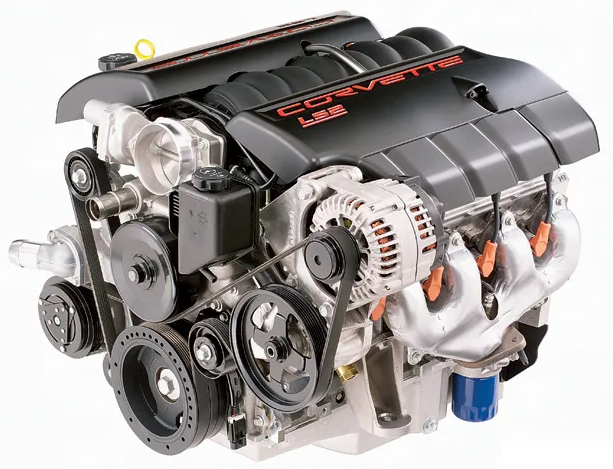
Engineering features of the LS2 include an all-aluminum construction for both the cylinder block and cylinder heads, contributing to reduced overall vehicle weight and improved thermal management. The block features six-bolt main bearing caps for exceptional crankshaft stability and durability. Fuel delivery is managed by a sequential port fuel injection (SFI) system, providing precise fuel metering for optimal combustion efficiency. The valvetrain utilizes a pushrod-operated overhead valve design with two valves per cylinder, known for its compact packaging and inherent reliability. Unlike some contemporary engines, the LS2 did not incorporate advanced variable valve timing (VVT) technology, focusing instead on optimizing its fixed cam profile for broad torque and high-rpm power production.
The Cadillac LS2 engine was specifically deployed in the 2006-2007 Cadillac CTS-V, where it contributed significantly to the model’s performance credentials. Beyond Cadillac, the LS2 saw widespread application across various General Motors performance vehicles, including the 2005-2007 Chevrolet Corvette (C6), 2005-2006 Pontiac GTO, and 2005-2006 Chevrolet SSR. Its versatility and robust design made it a favored choice for a range of rear-wheel-drive performance platforms during its production run.
Technical Specifications
| Specification | Value |
|---|---|
| Displacement (cc) | 5967 |
| Max Power (hp (kW) @ RPM) | 400 hp (298 kW) @ 6000 RPM |
| Max Torque (Nm (kg*m) @ RPM) | 542 Nm (55.3 kg*m) @ 4400 RPM |
| Fuel Type | Premium Unleaded (91+ RON recommended) |
| Fuel Consumption (l/100 km) | 11.5 – 13.5 (Combined Cycle, varies by vehicle) |
| Engine Type | V8, 90-degree, OHV, Naturally Aspirated |
| Compression Ratio | 10.9:1 |
| Cylinder Bore (mm) | 101.6 |
| Piston Stroke (mm) | 92.0 |
| Valvetrain | Pushrod, OHV |
| Valves per Cylinder | 2 |
| Additional Info | Aluminum block and heads, Sequential Port Fuel Injection (SFI) |
Common Problems & Reliability
The Cadillac LS2 engine is widely regarded for its inherent reliability and durability, a hallmark of the General Motors small-block architecture. However, like any internal combustion engine, certain common issues can arise, particularly as mileage accumulates. One notable concern for some LS2 owners involves elevated oil consumption. This can sometimes be attributed to the PCV (Positive Crankcase Ventilation) system design, leading to oil ingestion through the intake, or in less common cases, issues related to piston rings or cylinder bore wear. Addressing the PCV system with updated components or catch cans can often mitigate this.
Another area of potential concern for higher-mileage or aggressively driven LS2s involves valve spring fatigue. While the factory springs are generally robust for stock applications, they can weaken over extended use or with modifications that increase valve lift or engine RPM. Symptoms may include a ticking noise or, in severe cases, misfires due to a collapsed spring. Lastly, while the timing chain system is typically very durable, excessive mileage (e.g., beyond 150,000 miles) can lead to chain stretch. This condition can manifest as decreased engine performance, engine noise, or trigger diagnostic trouble codes related to camshaft/crankshaft correlation. The expected service life of an LS2, when properly maintained, can easily exceed 200,000 miles (320,000 km) before requiring a major overhaul, demonstrating its exceptional longevity.
Maintenance Tips & Service Schedule
Proactive and consistent maintenance is crucial for maximizing the longevity and performance of the Cadillac LS2 engine. Adherence to manufacturer-recommended service intervals ensures optimal operation and helps prevent premature component wear.
- Engine Oil & Filter: Regular oil changes are paramount. Use a high-quality 5W-30 synthetic engine oil that meets GM’s dexos1 specification. The Oil Life Monitor (OLM) system should be followed, typically indicating an oil change interval between 7,500 and 10,000 miles (12,000-16,000 km) or annually, whichever occurs first, depending on driving conditions.
- Spark Plugs: Replace iridium-tipped spark plugs approximately every 100,000 miles (160,000 km). Inspect ignition coils and wires for any signs of wear or degradation at this interval.
- Engine Air Filter: Inspect the air filter at every oil change and replace it as needed, generally every 15,000-30,000 miles (24,000-48,000 km) or more frequently in dusty environments.
- Coolant Flush: The cooling system utilizes Dex-Cool extended-life coolant. A coolant flush and refill are recommended every 5 years or 100,000 miles (160,000 km).
- Timing Chain: The LS2 employs a robust timing chain system designed for the life of the engine. Routine replacement is not typically required. However, inspection for stretch or wear may be prudent during significant engine servicing at very high mileage (e.g., 150,000+ miles) if symptoms arise.
- Fuel Filter: The fuel filter is typically integrated within the fuel pump module in the fuel tank and is generally considered a non-serviceable item for routine maintenance.
Conclusion
The Cadillac LS2 engine stands as a testament to General Motors’ expertise in producing powerful, reliable, and durable V8 powerplants. Its aluminum construction, robust design, and strong performance figures make it a highly desirable engine for performance enthusiasts. Despite a few known tendencies such as potential oil consumption in some units, these issues are generally manageable or preventable with diligent maintenance. For a used vehicle buyer, an LS2-equipped car represents a safe and reliable choice, offering significant performance potential and an expected long service life, provided a comprehensive service history indicates proper care.