
Overview & Design Features
The Cadillac LT4 is a high-performance, supercharged 6.2-liter (6162 cc) V8 engine, part of General Motors’ Gen V Small Block family. Introduced in 2015 for the Chevrolet Corvette C7 Z06, it represents a pinnacle of pushrod V8 engineering, delivering exceptional power and torque. The LT4 quickly became GM’s flagship supercharged V8, later adopted by Cadillac for its elite performance models, cementing its legacy as a formidable powerplant for American muscle and luxury performance vehicles.
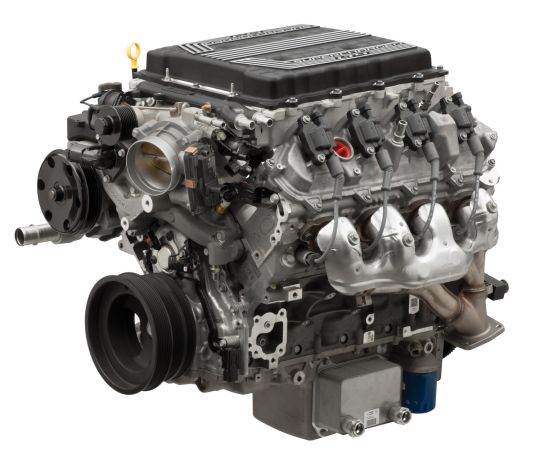
Engineered for extreme performance, the LT4 features an aluminum cylinder block with cast-iron cylinder liners and aluminum cylinder heads, ensuring both strength and weight reduction. It utilizes a sophisticated direct fuel injection system, which precisely atomizes fuel directly into the combustion chambers, optimizing efficiency and power output. Complementing this is a compact 1.7L Eaton R1740 TVS supercharger, integrated within the valley, providing forced induction. The engine also incorporates continuously variable valve timing (VVT), enhancing torque delivery across the RPM range and contributing to improved fuel economy and emissions control.
The LT4 engine has been deployed across several high-performance vehicle platforms. Its primary Cadillac applications include the 2016-2019 Cadillac CTS-V, where it produced 640 horsepower, and the 2022-present Cadillac CT5-V Blackwing, offering an even more potent 668 horsepower. Beyond Cadillac, the LT4 powered the 2015-2019 Chevrolet Corvette C7 Z06 and the 2017-present Chevrolet Camaro ZL1, both tuned to deliver 650 horsepower. These applications highlight the engine’s versatility and robust design, capable of delivering supercar-level performance in various chassis configurations.
Technical Specifications
| Specification | Value |
|---|---|
| Displacement (cc) | 6162 |
| Max Power (hp (kW) @ RPM) | 668 (498) @ 6500 (CT5-V Blackwing) |
| Max Torque (Nm (kg*m) @ RPM) | 893 (91.0) @ 3600 (CT5-V Blackwing) |
| Fuel Type | Premium Unleaded (91+ RON) |
| Fuel Consumption (l/100 km) | ~13.8 (Combined, estimated) |
| Engine Type | V8, Supercharged, OHV, Direct Injection |
| Compression Ratio | 10.0:1 |
| Cylinder Bore (mm) | 103.25 |
| Piston Stroke (mm) | 92.0 |
| Valvetrain | Overhead Valve (OHV), Variable Valve Timing (VVT) |
| Valves per Cylinder | 2 |
| Additional Info | Eaton R1740 TVS Supercharger, Dry-Sump (certain applications), Forged Steel Crankshaft, Forged Connecting Rods |
Common Problems & Reliability
The Cadillac LT4 engine generally exhibits robust reliability for a high-performance unit, though certain areas warrant attention. A common issue observed is wear or failure of the supercharger isolator coupler, which can manifest as a rattling or “marbles in a can” noise from the supercharger, particularly at idle or low RPMs. While not immediately catastrophic, prolonged operation with a worn coupler can lead to diminished supercharger efficiency and potential damage if left unaddressed.
Another area of consideration is the PCV (Positive Crankcase Ventilation) system. While direct injection engines like the LT4 are less prone to severe intake valve carbon buildup than port-injected predecessors, some oil ingestion through the PCV system can still occur over time, potentially leading to minor deposits on the intake valves or within the intercooler brick assembly. Regular inspection and potentially the use of an oil catch can are sometimes recommended by enthusiasts to mitigate this.
With proper and diligent maintenance, including adherence to manufacturer-specified service intervals and fluid quality, the Cadillac LT4 engine is engineered for a substantial service life. A realistic expected service life before requiring a major overhaul is typically in excess of 200,000 miles (320,000 km), especially in vehicles that are not regularly subjected to extreme track conditions.
Maintenance Tips & Service Schedule
Proper maintenance is paramount for the longevity and sustained performance of the LT4 engine. Engine oil changes are critical, recommended every 7,500 miles (12,000 km) or annually, whichever comes first. For track use or aggressive driving, more frequent oil changes are advisable. The engine requires a Dexos-approved full synthetic oil, typically 0W-40 or 5W-30, based on the specific vehicle’s owner’s manual.
Spark plugs should be replaced every 60,000 miles (96,000 km) to maintain optimal combustion efficiency. The cooling system, filled with Dex-Cool coolant, should undergo a flush and refill every 5 years or 100,000 miles (160,000 km). While the timing chain is designed for the life of the engine, it is prudent to monitor for any unusual noises that might indicate wear at very high mileages. The supercharger itself typically contains a sealed oil fill designed for the life of the unit, but inspection for leaks and unusual noises at high mileage is good practice.
Conclusion
The Cadillac LT4 engine stands as a testament to American performance engineering, offering immense power and sophistication. For a used vehicle buyer, it represents a highly desirable and generally reliable choice within the high-performance segment. While specific common issues like the supercharger isolator should be noted, these are often manageable with preventative maintenance or relatively straightforward repairs. With a documented service history and adherence to diligent maintenance schedules, an LT4-equipped vehicle can provide exhilarating performance and a long, satisfying ownership experience.