
Overview & Design Features
The Cadillac L26 is a robust 3.8-liter (3791 cc) V6 engine, part of General Motors’ renowned 3800 Series III family. Manufactured by GM Powertrain, this iteration represents the culmination of decades of development in the highly successful 3.8L V6 lineage. Known for its strong low-end torque, respectable fuel economy, and exceptional durability, the L26 was widely deployed across various front-wheel-drive platforms, serving as a reliable powertrain for several Cadillac models.
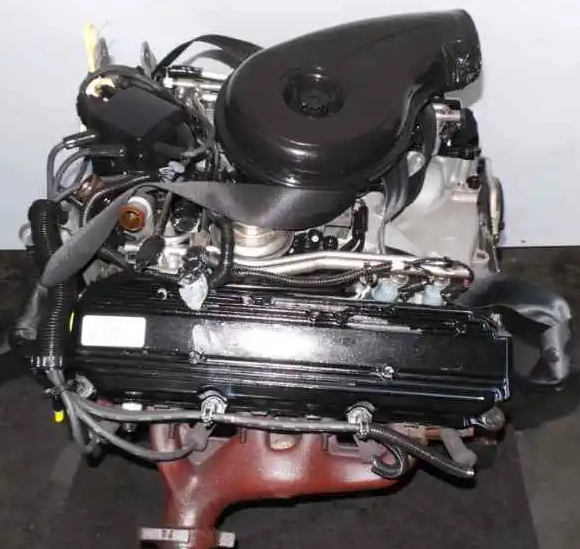
Engineered for longevity and smooth operation, the L26 features a durable cast iron block and cast aluminum cylinder heads. Its overhead valve (OHV) design, utilizing a pushrod valvetrain, contributes to its compact size and inherent simplicity, which often translates to reduced manufacturing costs and enhanced reliability. Fuel delivery is managed by Sequential Multi-Port Fuel Injection (SFI), providing precise fuel metering for optimal combustion efficiency and emissions control. Unlike some contemporary engines, the L26 does not incorporate variable valve timing (VVT) or direct injection, prioritizing proven technology for its intended application.
The L26 engine was notably utilized in Cadillac vehicles from the early to mid-2000s. Its primary application in the Cadillac lineup includes the 2000-2005 Cadillac DeVille, specifically in the standard DeVille and DeVille DHS (DeVille High Luxury Sedan) trims. It provided a dependable and comfortable driving experience, aligning with Cadillac’s luxury and reliability expectations for the era.
Technical Specifications
| Specification | Value |
|---|---|
| Displacement (cc) | 3791 cc |
| Max Power (hp (kW) @ RPM) | 205 hp (153 kW) @ 5200 RPM |
| Max Torque (Nm (kg*m) @ RPM) | 305 Nm (31.1 kg*m) @ 4000 RPM |
| Fuel Type | Unleaded Gasoline (Regular 87 Octane) |
| Fuel Consumption (l/100 km) | ~9.4-11.2 (Combined, varies by vehicle application) |
| Engine Type | V6, Overhead Valve (OHV) |
| Compression Ratio | 9.4:1 |
| Cylinder Bore (mm) | 96.52 mm |
| Piston Stroke (mm) | 86.36 mm |
| Valvetrain | Pushrod (OHV) |
| Valves per Cylinder | 2 |
| Additional Info | Cast Iron Block, Cast Aluminum Heads, Sequential Multi-Port Fuel Injection (SFI), Electronic Throttle Control |
Common Problems & Reliability
The Cadillac L26 engine, while largely considered reliable, does have a few common issues that prospective owners should be aware of. A prevalent problem involves the degradation of the plastic upper intake manifold gaskets, particularly around the EGR passage. This can lead to coolant leaks into the intake runners or external leaks, potentially causing misfires, overheating, or internal engine damage if left unaddressed. Similarly, the lower intake manifold gaskets can also fail, resulting in oil or coolant leaks.
Another frequently encountered issue is related to the exhaust gas recirculation (EGR) pipe becoming clogged with carbon deposits, which can lead to rough idle, reduced performance, or diagnostic trouble codes. Less common but still possible are oil pan gasket leaks and occasional failures of the crankshaft position sensor, which can cause no-start conditions or intermittent stalling. When properly maintained and promptly repaired, the L26 engine is known for its longevity, with many units exceeding 200,000 to 300,000 miles (320,000 to 480,000 km) before requiring a major overhaul.
Maintenance Tips & Service Schedule
Proactive maintenance is key to maximizing the lifespan and reliability of the Cadillac L26 engine. Regular oil changes are paramount; use 5W-30 synthetic blend or full synthetic motor oil every 5,000-7,500 miles (8,000-12,000 km) or every 6 months, whichever comes first. Spark plugs, typically platinum or iridium-tipped, should be replaced every 100,000 miles (160,000 km).
The cooling system requires attention, particularly given the intake manifold gasket issues. The coolant should be a Dex-Cool compatible formula and flushed/replaced every 5 years or 100,000 miles (160,000 km). Air filters should be inspected at every oil change and replaced every 15,000-30,000 miles (24,000-48,000 km), while the fuel filter is generally recommended for replacement every 30,000 miles (48,000 km). The L26 utilizes a timing chain system, which is designed for the life of the engine and typically does not require scheduled replacement, though inspection of tensioners might be advisable at very high mileages if abnormal noises develop.
Conclusion
The Cadillac L26 engine stands as a testament to tried-and-true engineering, offering a blend of dependable performance and impressive durability. For a used vehicle buyer, an L26-equipped Cadillac generally represents a safe and reliable choice, provided the vehicle has received consistent maintenance, particularly regarding intake manifold gasket replacements. Its straightforward design and widespread availability of parts contribute to relatively affordable ownership costs.