
Overview & Design Features
The Chery CAC-SQR472 is a compact, naturally aspirated, inline four-cylinder gasoline engine produced by the Chinese automotive manufacturer Chery Automobile Co., Ltd. Primarily designed for light urban vehicles, this engine represents a significant component in Chery’s early expansion into the global automotive market, offering a balance of economy and adequate performance for its intended applications. With a displacement of 998 cubic centimeters (1.0L), it served as a foundational powertrain for some of Chery’s most successful entry-level models, establishing a reputation for affordability and simplicity.
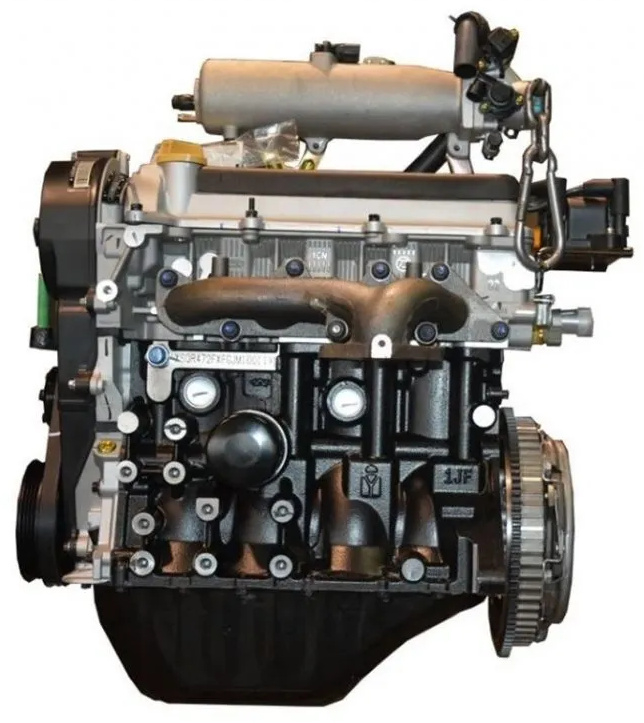
Engineering features of the SQR472 include a robust cast iron cylinder block, paired with an aluminum alloy cylinder head to optimize weight distribution and heat dissipation. It utilizes a Single Overhead Camshaft (SOHC) configuration, operating 16 valves (four per cylinder), which was a relatively advanced setup for a budget-oriented engine of its era. Fuel delivery is managed by a Multi-Point Fuel Injection (MPI) system, ensuring precise fuel metering and efficient combustion. The valvetrain design is straightforward, prioritizing reliability and ease of maintenance over complex variable valve timing systems, fitting its role in economical vehicles.
The CAC-SQR472 engine found widespread deployment across several Chery vehicle models during its production run. Most notably, it powered various iterations of the Chery QQ3 (also known as the Chery QQ), which was highly popular in many developing markets, from approximately 2003 through 2015. It was also utilized in the Chery A1 and some early versions of the Chery Riich M1 (also known as Chery M1 or Chery X1). This engine was primarily paired with manual transmissions, underscoring its focus on economical operation and low cost of ownership.
Technical Specifications
| Specification | Value |
|---|---|
| Displacement (cc) | 998 |
| Max Power (hp (kW) @ RPM) | 68 hp (50 kW) @ 6000 RPM |
| Max Torque (Nm (kg*m) @ RPM) | 93 Nm (9.5 kg*m) @ 3500-4500 RPM |
| Fuel Type | Gasoline (minimum RON 92) |
| Fuel Consumption (l/100 km) | Combined: ~5.5-6.5 |
| Engine Type | Inline 4-cylinder, Naturally Aspirated |
| Compression Ratio | 9.8:1 |
| Cylinder Bore (mm) | 72.0 |
| Piston Stroke (mm) | 61.3 |
| Valvetrain | SOHC (Single Overhead Camshaft) |
| Valves per Cylinder | 4 |
| Additional Info | Cast Iron Block, Aluminum Head, Multi-Point Fuel Injection |
Common Problems & Reliability
The Chery CAC-SQR472 engine is generally regarded as a utilitarian and robust unit for its class, though it exhibits several common issues, particularly with age and mileage. One recurring problem involves the timing belt and its tensioner system. Premature wear of the timing belt or failure of the tensioner can lead to catastrophic engine damage if not addressed promptly. Another frequent concern is the potential for oil leaks, often originating from the valve cover gasket or the oil pan gasket, which can necessitate replacement of seals. Furthermore, some units may experience minor coolant leaks from hoses or the radiator, leading to gradual coolant loss and potential overheating if not monitored.
Under a regimen of consistent and proper maintenance, the CAC-SQR472 engine typically demonstrates an expected service life of approximately 150,000 to 200,000 kilometers before major components may require significant overhaul or replacement. This longevity is commensurate with its design philosophy as a cost-effective and straightforward powertrain.
Maintenance Tips & Service Schedule
Maintaining the Chery CAC-SQR472 engine in optimal condition requires adherence to a disciplined service schedule. Engine oil and filter changes are paramount, recommended every 5,000 to 7,500 kilometers or every six months, whichever comes first. A 5W-30 or 10W-40 viscosity synthetic or semi-synthetic oil, compliant with API SN/SM standards, is generally appropriate. The timing belt, along with its tensioner and idlers, should be replaced every 60,000 to 80,000 kilometers or every 4-5 years, as a preventative measure against potential failure. Failure to replace the timing belt within this interval poses a significant risk of severe internal engine damage due to the interference design.
Spark plugs typically require replacement every 30,000 to 40,000 kilometers. Coolant flushes and refills with an appropriate long-life antifreeze are recommended every two years or 40,000 kilometers to prevent corrosion and maintain cooling efficiency. Regular inspection of all hoses, belts, and fluid levels is essential, as is monitoring for any unusual noises or performance anomalies. Air filter and fuel filter replacement should follow manufacturer guidelines, generally every 20,000 to 40,000 kilometers to ensure proper air-fuel mixture and prevent contamination.
Conclusion
The Chery CAC-SQR472 engine stands as a testament to practical, economical engineering for its market segment. For a used vehicle buyer, this engine can be a relatively safe and reliable choice, particularly if its service history indicates diligent maintenance. Its straightforward design translates to lower repair costs and accessible parts. However, potential buyers should be acutely aware of the timing belt service history and inspect for common oil and coolant leaks. A well-maintained SQR472 engine offers a dependable, albeit modest, powertrain solution for an entry-level vehicle, making it a viable option for those prioritizing low running costs and simplicity.