
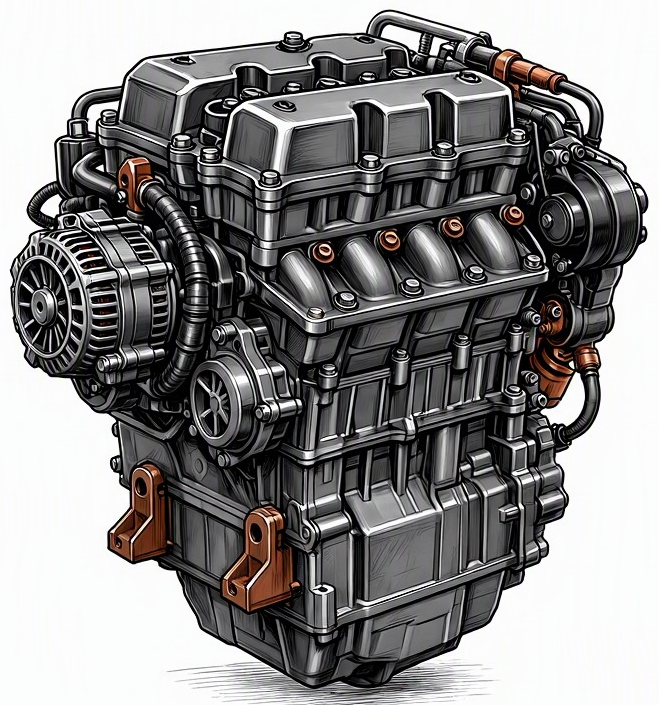
Problem Overview & Engine Systems
The “Diesel fuel injection pump metering unit sticking” refers to a critical malfunction within the high-pressure fuel pump (HPFP) assembly where the internal components responsible for regulating fuel quantity lose their intended freedom of movement. Specifically, the metering unit, often an electronically controlled solenoid valve (e.g., Suction Control Valve – SCV, or Metering Control Valve – MCV), is designed to precisely adjust the volume of fuel delivered to the HPFP’s pumping elements. When it sticks, whether in an open, closed, or intermediate position, it disrupts the accurate control of fuel flow into the high-pressure side of the system. This directly impacts the Fuel System and the overarching Engine Management System, affecting combustion stability, power output, and emissions.
Internal components directly affected include the metering valve (spool or pintle), its guiding sleeve or bore, internal springs, and potentially the armature of its associated solenoid. These components operate with micron-level tolerances, making them highly susceptible to contamination or wear-induced binding. The HPFP itself is typically integrated into the Engine Block or driven by the Valvetrain/timing system, receiving low-pressure fuel and outputting high-pressure fuel to the common rail or directly to injectors.
Common Symptoms
- Primary Signs:
- Check Engine Light (CEL/MIL): Frequently illuminated, accompanied by Diagnostic Trouble Codes (DTCs) related to fuel rail pressure regulation (e.g., P0087 – Fuel Rail/System Pressure – Too Low, P0088 – Fuel Rail/System Pressure – Too High, P0090 – Fuel Pressure Regulator 1 Control Circuit) or fuel quantity control.
- Rough Idle/Stalling: Erratic engine RPM at idle, with potential for the engine to stall, especially after starting or when coming to a stop.
- Abnormal Exhaust Smoke: Depending on whether the unit is stuck rich (over-fueling) or lean (under-fueling), black smoke (unburnt fuel) or white/blue smoke (incomplete combustion, possibly due to poor atomization from insufficient pressure, or excessive unburnt fuel) may be observed.
- Hesitation/Lack of Responsiveness: Engine struggles to respond to throttle input, exhibiting a noticeable delay or lack of power.
- Engine Behavior Changes:
- Significant Power Loss: The most common symptom, as the engine cannot receive the correct fuel quantity required for commanded load, leading to reduced acceleration and top speed.
- Difficulty Starting (Especially Cold): The HPFP may struggle to build sufficient rail pressure or deliver the correct starting fuel quantity, resulting in extended crank times or a no-start condition.
- Intermittent Misfires: Inconsistent fuel delivery can cause individual cylinders to misfire irregularly.
- Fluctuating Engine Speed: RPMs may surge and drop unpredictably, particularly under varying load conditions.
- Increased Fuel Consumption: Inefficient combustion due to incorrect fuel metering can lead to noticeably poorer fuel economy.
- Engine Entering “Limp Home” Mode: The Engine Control Unit (ECU) may detect severe deviations in fuel pressure or quantity and limit engine power to prevent damage.
Root Causes & Failure Mechanisms
- Fuel Contamination: The predominant cause. Microscopic particulate matter (dirt, rust, debris) from a compromised fuel supply, inadequate fuel filtration, or corrosion within the fuel tank/lines can abrade the highly precise surfaces of the metering unit components or physically lodge within the tight clearances, restricting movement.
- Degraded Fuel Quality:
- Water Ingress: Water contamination leads to corrosion of ferrous components within the HPFP and metering unit, creating surface irregularities and increasing friction. It also reduces fuel lubricity, accelerating wear.
- Biodiesel-Related Issues: High percentages of Fatty Acid Methyl Esters (FAME) can oxidize and form deposits (lacquer, varnish) on precision components, particularly when exposed to heat, impeding the metering unit’s movement. Biodiesel also has a higher propensity to absorb water and can promote microbial growth.
- Insufficient Lubricity: Modern Ultra-Low Sulfur Diesel (ULSD) has naturally lower lubricity. If fuel additives are insufficient or absent, the metallic contact surfaces within the metering unit experience increased friction and accelerated wear, leading to binding.
- Thermal Stress and Oxidation: Prolonged operation at high fuel temperatures can accelerate the breakdown and oxidation of fuel, leading to the formation of carbonaceous deposits and varnish that accumulate on the metering unit’s delicate moving parts, causing them to stick.
- Internal Component Wear or Manufacturing Defects: Over extended service life, normal friction and hydraulic forces can lead to wear on the metering valve or its bore, creating burrs or an irregular surface that impedes smooth operation. While rare, manufacturing imperfections in material hardness, surface finish, or dimensional tolerance can result in premature sticking.
How to Diagnose and Troubleshoot
Diagnosing a sticking diesel fuel injection pump metering unit requires a systematic approach leveraging specialized tools and detailed understanding of fuel system dynamics.
- Initial Visual Inspection: Begin by examining the fuel system for obvious signs of external leaks, damaged fuel lines, or a clogged/incorrectly installed fuel filter. Check fuel clarity for visible water or particulate matter.
- Diagnostic Trouble Code (DTC) Retrieval: Connect an advanced OBD-II/EOBD scanner or OEM-specific diagnostic tool to the vehicle’s diagnostic port. Retrieve all stored, pending, and permanent DTCs. Focus on codes related to fuel rail pressure (P0087, P0088), fuel quantity control (P0090, P0091, P0092), or HPFP performance. These codes provide the initial direction for further diagnostics.
- Live Data Analysis (Engine Running/Cranking): Access live data streams from the ECU using the diagnostic tool. Monitor key fuel system parameters:
- Desired vs. Actual Fuel Rail Pressure: This is paramount. A significant and persistent discrepancy between the commanded (desired) and measured (actual) rail pressure, especially during cranking or under varying engine loads, is a strong indicator of a metering unit malfunction.
- Fuel Pressure Regulator (FPR)/Metering Unit Solenoid Duty Cycle/Current: Observe the command signal from the ECU to the metering unit solenoid. If the ECU is commanding a high duty cycle/current to increase pressure, but actual pressure remains low, the unit may be stuck closed or inefficient. Conversely, if the ECU commands a low duty cycle to reduce pressure, but actual pressure remains high, the unit may be stuck open.
- Fuel Temperature and Injector Quantity Adjustments: Monitor these parameters for anomalies that might correlate with fuel pressure issues.
- Fuel System Pressure Tests:
- Low-Pressure Side Test: Measure the fuel pressure and flow rate from the lift pump (tank pump) to the HPFP. Ensure the HPFP is receiving an adequate and consistent supply of fuel. Low supply pressure can mimic metering unit issues.
- High-Pressure Side Test (Specialized Equipment): If feasible and safe, use specialized high-pressure fuel gauges or pressure transducers to directly monitor rail pressure during cranking and various engine RPMs. Compare readings against manufacturer specifications. A slow or absent pressure build-up or inability to maintain target pressure points towards an HPFP issue, including a stuck metering unit.
- Fuel Quality Inspection: Draw a sample of fuel from the tank or the fuel filter housing. Visually inspect for water separation, sediment, cloudiness, or any unusual coloration. A laboratory fuel analysis can confirm contamination, lubricity issues, or biodiesel degradation products.
- Actuator Test (Bidirectional Scan Tool): If the metering unit is electronically controlled, use a bidirectional scan tool to perform an “actuator test” or “special function” for the fuel pressure regulator/metering unit. This allows you to command the solenoid to specific positions or duty cycles while monitoring the resulting rail pressure. A non-responsive, erratic, or sluggish pressure change confirms the mechanical sticking of the metering unit.
- Resistance/Continuity Check (Solenoid): Measure the electrical resistance of the metering unit solenoid (if externally accessible) and compare it to manufacturer specifications. While an out-of-spec reading indicates an electrical fault, an in-spec reading does not rule out mechanical sticking.
Recommended Repairs and Solutions
Addressing a sticking diesel fuel injection pump metering unit typically requires precise component replacement due to the high-pressure, precision-engineered nature of the fuel system.
- High-Pressure Fuel Pump (HPFP) Replacement: In most modern diesel engines, the metering unit is an integral part of the HPFP. Therefore, the most common and often the only viable solution is the complete replacement of the HPFP assembly. Some HPFPs (e.g., Bosch CP3, Denso HP3) allow for the separate replacement of the Suction Control Valve (SCV) or Metering Control Valve (MCV) as a standalone unit; however, this depends on the specific pump design and manufacturer service procedures. Always consult the OEM service manual.
- Comprehensive Fuel System Cleaning/Flushing: If contamination (particulates, water, degraded fuel) is identified as the root cause, a thorough cleaning and flushing of the entire fuel system is imperative. This includes draining and cleaning the fuel tank, replacing all fuel lines (if contaminated), cleaning the common rail, and ensuring the low-pressure fuel pump and its filter are clear of debris. Failure to eliminate the source of contamination will inevitably lead to a recurrence of the problem with the new HPFP.
- Fuel Filter Replacement: Always replace all fuel filters (primary, secondary, and any inline filters) during this repair. Use only OEM-specified or equivalent quality filters to prevent future contamination.
- Injector Inspection and Testing: A malfunctioning metering unit can cause inconsistent fuel delivery to the injectors, potentially leading to their contamination or premature wear. It is highly recommended to perform injector leak-off tests, return flow tests, and potentially remove injectors for professional bench testing (spray pattern, quantity, response time) to ensure they have not been damaged. Replace any injectors found to be faulty.
- ECU Adaptations and Reprogramming: After replacing fuel system components, it is often necessary to perform adaptation resets or complete reprogramming of the Engine Control Unit (ECU) to ensure proper calibration with the new parts and to clear any learned fuel trims that may have been adversely affected by the fault.
Driving Safety Risk Factors: A sticking metering unit poses significant safety risks. The potential for sudden power loss, engine stalling in traffic, or in rare extreme cases, uncontrolled engine acceleration (runaway due to severe over-fueling) makes operating a vehicle with this malfunction highly dangerous. The vehicle should be taken out of service immediately until a professional diagnosis and repair are completed.
Maintenance Recommendations
Preventing diesel fuel injection pump metering unit sticking hinges on meticulous fuel system maintenance and careful operational habits.
- Adhere Strictly to Fuel Filter Replacement Intervals: This is the single most critical preventative measure. Follow the manufacturer’s recommended service intervals for all fuel filters (primary and secondary). For vehicles operating in dusty environments, using lower-quality fuel, or under severe duty cycles, consider reducing these intervals. Always use OEM or high-quality aftermarket filters that meet or exceed manufacturer specifications for filtration efficiency.
- Utilize High-Quality, Clean Diesel Fuel: Source diesel fuel exclusively from reputable, high-volume fueling stations. Avoid purchasing fuel from unknown sources or “bargain” stations, as these may have compromised quality, higher water content, or particulate contamination. Ensure the fuel meets the correct specifications for your engine (e.g., Cetane number, lubricity, sulfur content).
- Consider Reputable Diesel Fuel Additives: Judiciously use high-quality diesel fuel conditioners, especially with Ultra-Low Sulfur Diesel (ULSD), which has reduced natural lubricity. Lubricity improvers can help mitigate wear within the HPFP and metering unit. Anti-gelling additives are essential in cold climates to prevent fuel gelling, which can block filters and impede fuel flow. Always choose additives from trusted brands and follow dosage recommendations.
- Regularly Monitor Fuel Tank Condition: Periodically inspect the fuel tank for signs of condensation, rust, or sediment accumulation. If possible, consider draining the tank annually to remove any accumulated water or heavy contaminants. Avoid habitually running the fuel tank until it is nearly empty, as this increases the likelihood of drawing sediment and water from the bottom of the tank into the fuel system.
- Maintain Extreme Cleanliness During Service: Any time the fuel system is opened (e.g., during fuel filter changes), exercise extreme caution to prevent the ingress of dirt, dust, or other contaminants. Even microscopic particles can severely damage precision fuel system components. Use clean tools, gloves, and protect open fuel lines or components immediately.
- Regular Diagnostic Monitoring: Incorporate routine diagnostic scans into regular service schedules, even in the absence of a Check Engine Light. Monitoring live data for fuel rail pressure (desired vs. actual) and metering unit command signals can help identify subtle deviations from normal operation, allowing for proactive intervention before a complete failure occurs.
