
Only the first generation of the well-liked Q7 crossover had the 4.2-liter diesel Audi BTR or Q7 4.2 TDI engine installed prior to its redesign. The engine was manufactured from 2007 to 2009. The BVN index of the diesel engine in the rear of the D3 is different from that of the A8 sedans.
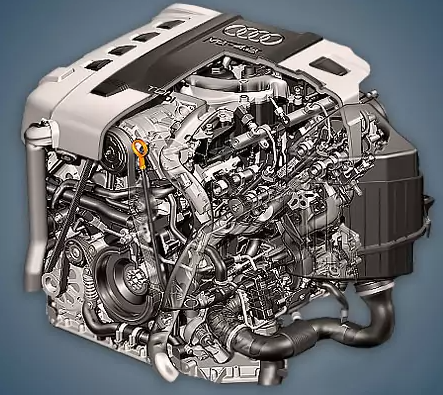
The EA898 series also includes: AKF, ASE, BTR, CKDA, CCGA, CZAC, DHVA.
Specifications
| Production years | 2007-2009 |
| Displacement, cc | 4134 |
| Fuel system | Common Rail |
| Power output, hp | 326 |
| Torque output, Nm | 760 |
| Cylinder block | cast iron V8 |
| Block head | aluminum 32v |
| Cylinder bore, mm | 83 |
| Piston stroke, mm | 95.5 |
| Compression ratio | 16.4 |
| Features | intercooler |
| Hydraulic lifters | yes |
| Timing drive | chain |
| Phase regulator | no |
| Turbocharging | Garrett GTB1749LVK |
| Recommended engine oil | 5W-30 |
| Engine oil capacity, liter | 9.5 |
| Fuel type | diesel |
| Euro standards | EURO 4 |
| Fuel consumption, L/100 km (for Audi Q7 2008) — city — highway — combined |
14.9 8.9 11.1 |
| Engine lifespan, km | ~350 000 |
| Weight, kg | 255 |
The engine was installed on:
- Audi Q7 1 (4L) in 2007 – 2009.
Disadvantages of the Audi BTR engine
This diesel engine is incredibly dependable, and issues only arise at high mileage;
Bad fuel cannot be tolerated by a contemporary fuel system with piezo injectors;
Here, saving on lubrication significantly shortens the lifespan of hydraulic lifters and turbines; timing chain replacement may be necessary after 200–250 thousand kilometers.