
From 2006 to 2012, the 2.9-liter General Motors LLV engine was assembled at an American plant and mounted on pickup trucks of the GMT355 platform, such as the Chevrolet Colorado and the comparable GMC Canyon. This 2.8-liter power unit’s predecessor is referred to by its LK5 index.
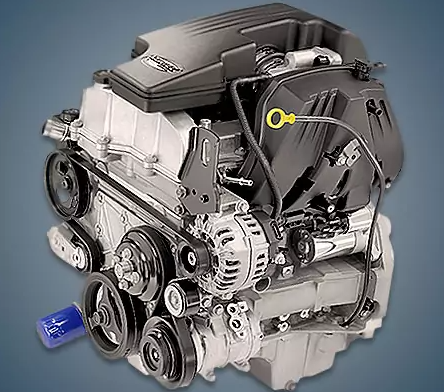
The Atlas family: LLV, LLR, LL8.
Specifications
| Production years | 2006-2012 |
| Displacement, cc | 2921 |
| Fuel system | distributed injection |
| Power output, hp | 185 |
| Torque output, Nm | 258 |
| Cylinder block | aluminum R4 |
| Block head | aluminum 16v |
| Cylinder bore, mm | 95.5 |
| Piston stroke, mm | 102 |
| Compression ratio | 10.0 |
| Features | DOHC |
| Hydraulic lifters | yes |
| Timing drive | chain |
| Phase regulator | at the exhaust |
| Turbocharging | no |
| Recommended engine oil | 5W-30 |
| Engine oil capacity, liter | 4.7 |
| Fuel type | petrol |
| Euro standards | EURO 3 |
| Fuel consumption, L/100 km (for Chevrolet Colorado 2008) — city — highway — combined |
13.1 9.8 11.8 |
| Engine lifespan, km | ~380 000 |
| Weight, kg | 171 |
The engine was installed on:
- Chevrolet Colorado 1 (GMT355) in 2006 – 2012;
- GMC Canyon 1 (GMT355) in 2006 – 2012.
Disadvantages of the GM LLV engine
This power unit has no major flaws and is dependable and resourceful.
The most important thing is to routinely inspect the water pump and fan viscous coupling.
Aluminum block engines cannot withstand overheating, and these units have a limited lifespan.
Timing chain stretching and valve seat wear happen after 200,000 kilometers of operation.
Under warranty, 2009 and 2010 pickups had their cracked exhaust manifolds replaced.