
From 2010 to 2017, the General Motors LHU 2.0-liter turbo engine was manufactured in the United States and mounted on charged versions of well-known models like the Buick Verano and Regal. On Opel vehicles, this power unit is referred to by its unique index, A20NHT.
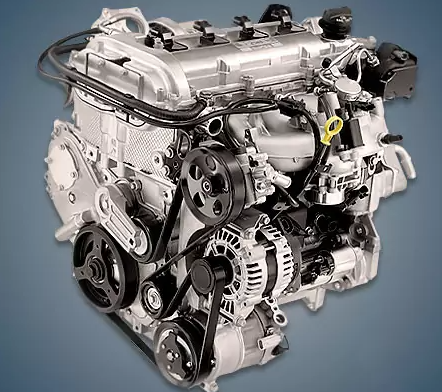
GM Ecotec’s second generation comprises LDK, LHU, LNF, LAF, LEA, LE5, and LE9.
Specifications
| Production years | 2010-2017 |
| Displacement, cc | 1998 |
| Fuel system | direct injection |
| Power output, hp | 220 – 275 |
| Torque output, Nm | 350 – 410 |
| Cylinder block | aluminum R4 |
| Block head | aluminum 16v |
| Cylinder bore, mm | 86 |
| Piston stroke, mm | 86 |
| Compression ratio | 9.2 |
| Features | DOHC |
| Hydraulic lifters | no |
| Timing drive | chain |
| Phase regulator | Dual CVCP |
| Turbocharging | BorgWarner K04 |
| Recommended engine oil | 5W-30 |
| Engine oil capacity, liter | 6.0 |
| Fuel type | petrol |
| Euro standards | EURO 5 |
| Fuel consumption, L/100 km (for Buick Verano 2014) — city — highway — combined |
12.9 7.9 10.5 |
| Engine lifespan, km | ~220 000 |
| Weight, kg | 163 |
The engine was installed on:
- Buick Regal 5 (GMX350) in 2010 – 2017;
- Buick Verano 1 (D1SB) in 2012 – 2016.
Disadvantages of the GM LHU engine
This turbo engine’s primary issue is its high knocking tendency.
As a result, it’s critical to keep an eye on the fuel’s quality and the radiators’ cleanliness.
The timing chain’s relatively small resource is the second most common issue.
Additionally, you will need to purchase pricey phase regulators if you neglect to replace the chains.
The engine’s short-lived injection pump and throttle assembly are additional flaws.