
From 1994 to 2006, the company manufactured the 2.5-liter Land Rover 300Tdi diesel engine, which it installed in its best-selling SUVs, the Defender, Discovery, and Range Rover Classic. The 200Tdi was replaced by the engine. This motor comes in nine different sizes, ranging from 16L to 24L, with either an electronic EDC or a traditional injection pump.
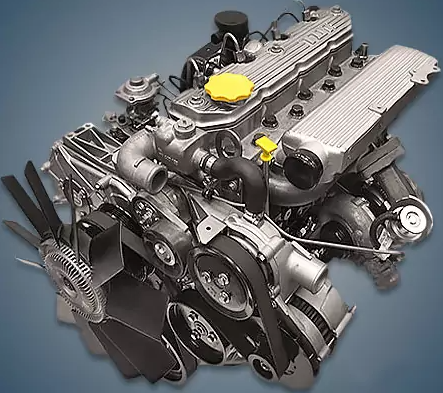
Specifications
| Production years | 1994-2006 |
| Displacement, cc | 2495 |
| Fuel system | direct injection |
| Power output, hp | 111 – 122 |
| Torque output, Nm | 265 – 300 |
| Cylinder block | cast iron R4 |
| Block head | aluminum 8v |
| Cylinder bore, mm | 90.47 |
| Piston stroke, mm | 97 |
| Compression ratio | 19.5 |
| Features | OHV |
| Hydraulic lifters | no |
| Timing drive | belt |
| Phase regulator | no |
| Turbocharging | Garrett T250-04 |
| Recommended engine oil | 5W-40 |
| Engine oil capacity, liter | 6.7 |
| Fuel type | diesel |
| Euro standards | EURO 1 |
| Fuel consumption, L/100 km (for Land Rover Discovery 1996) — city — highway — combined |
11.3 7.5 8.9 |
| Engine lifespan, km | ~320 000 |
The engine was installed on:
- Land Rover Defender 1 (L316) in 1994 – 1998;
- Land Rover Discovery 1 (LJ) in 1994 – 1998;
- Land Rover Range Rover 1 (LH) in 1994 – 1996.
Disadvantages of the Land Rover 300Tdi engine
This diesel engine is straightforward and dependable, and its only issues stem from large runs;
The timing belt frequently slipped in the early engines, and a repair kit is available for them;
The turbine won’t last very long if you turn off the car right away after a trip;
They frequently lament the vacuum pump, antifreeze leaks, and cylinder head gasket failure;
Remember to adjust the valve clearances and replace the timing belt every 80,000 kilometers.