
From 2000 to 2005, the company assembled the 1.1-liter 16-valve Rover 11K4F engine, which produced 75 horsepower and was limited to the 25 model. The 8-valve models 11K2A and 11K2D had single injection and a carburetor.
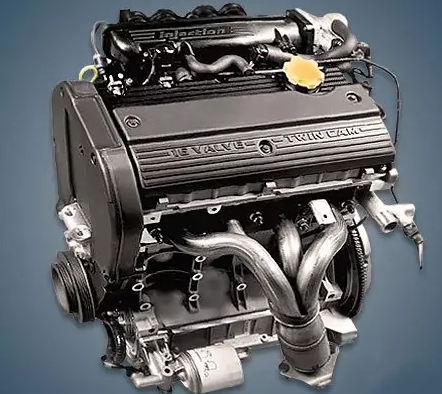
K-series engines include the 11K4F, 14K2F, 14K4F, 16K4F, 18K4F, 18K4K, and 18K4G.
Specifications
| Production years | 2000-2005 |
| Displacement, cc | 1119 |
| Fuel system | distributed injection |
| Power output, hp | 75 |
| Torque output, Nm | 95 |
| Cylinder block | aluminum R4 |
| Block head | aluminum 16v |
| Cylinder bore, mm | 75 |
| Piston stroke, mm | 63 |
| Compression ratio | 9.4 |
| Features | DOHC |
| Hydraulic lifters | yes |
| Timing drive | belt |
| Phase regulator | no |
| Turbocharging | no |
| Recommended engine oil | 5W-30 |
| Engine oil capacity, liter | 4.5 |
| Fuel type | petrol |
| Euro standards | EURO 3 |
| Fuel consumption, L/100 km (for Rover 25 2003) — city — highway — combined |
8.8 5.5 6.7 |
| Engine lifespan, km | ~230 000 |
| Weight, kg | 101 |
The engine was installed on:
- Rover 25 I (RF) in 2000 – 2005.
Disadvantages of the Rover 11K4F engine
This unit frequently breaks its gasket and is terrified of overheating;
The motor has wet sleeves, which frequently sag and crack at high mileage;
Thus, combining grease and antifreeze is the engine’s primary issue;
Don’t forget to replace the belt once every 100,000 kilometers; if it breaks, the valves will bend. Other drawbacks include expensive and short-lived engine mounts.