
From 1994 to 1999, the company produced the 1.4-liter 8-valve Rover 14K2F engine, which produced 75 horsepower and was fitted to models with an index of 100, 200, and 400. This engine was modified into the 14K2A, 14K2C, and 14K2D models with a carburetor and single injection.
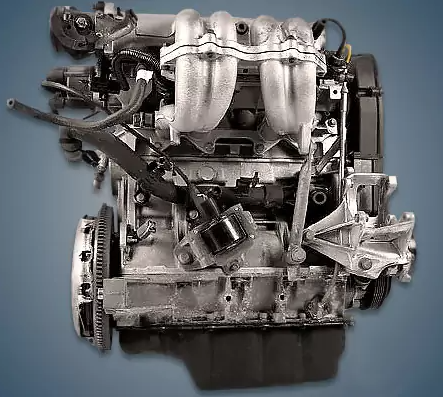
K-series engines include the 11K4F, 14K2F, 14K4F, 16K4F, 18K4F, 18K4K, and 18K4G.
Specifications
| Production years | 1994-1999 |
| Displacement, cc | 1396 |
| Fuel system | distributed injection |
| Power output, hp | 75 |
| Torque output, Nm | 117 |
| Cylinder block | aluminum R4 |
| Block head | aluminum 8v |
| Cylinder bore, mm | 75 |
| Piston stroke, mm | 79 |
| Compression ratio | 9.5-10.0 |
| Features | DOHC |
| Hydraulic lifters | yes |
| Timing drive | belt |
| Phase regulator | no |
| Turbocharging | no |
| Recommended engine oil | 5W-30 |
| Engine oil capacity, liter | 4.5 |
| Fuel type | petrol |
| Euro standards | EURO 2 |
| Fuel consumption, L/100 km (for Rover 214 i 1997) — city — highway — combined |
7.8 5.0 6.4 |
| Engine lifespan, km | ~240 000 |
| Weight, kg | 102 |
The engine was installed on:
- Rover 100 I (XP) in 1994 – 1998;
- Rover 200 III (RF) in 1995 – 1999;
- Rover 400 II (RT) in 1995 – 1999.
Disadvantages of the Rover 14K2F engine
The K family of engines frequently has gasket breakthroughs and overheats easily;
Additionally, the lubricant is combined with antifreeze, and the sleeves frequently sag or crack;
Electrical malfunctions and oil leaks are typically linked to the remaining engine issues;
The timing belt is required to change every 100,000 kilometers, and when it breaks, the valves bend. This unit’s weaknesses include its costly and short-lived supports.