
The 2.0-liter 16-valve Rover 20M4F or 20HDM16 engine was built between 1986 and 1995. It was installed on the 800 model until 1991, when it was restyled, and then on more sophisticated versions of the 200 and 400. This unit has a 177-hp turbocharged engine and a 120-hp single-injection version.
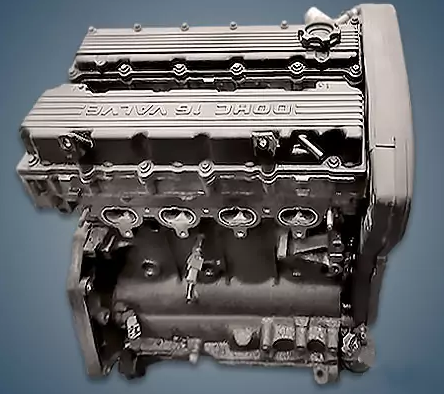
M/T-series engines: 20T4H, 20M4F, and 20T4G.
Specifications
| Production years | 1986-1995 |
| Displacement, cc | 1994 |
| Fuel system | distributed injection |
| Power output, hp | 133 – 140 |
| Torque output, Nm | 178 |
| Cylinder block | cast iron R4 |
| Block head | aluminum 16v |
| Cylinder bore, mm | 84.45 |
| Piston stroke, mm | 88.9 |
| Compression ratio | 10.0 |
| Features | DOHC |
| Hydraulic lifters | yes |
| Timing drive | belt |
| Phase regulator | no |
| Turbocharging | no |
| Recommended engine oil | 5W-30 |
| Engine oil capacity, liter | 5.9 |
| Fuel type | petrol |
| Euro standards | EURO 1/2 |
| Fuel consumption, L/100 km (for Rover 820 1988) — city — highway — combined |
11.3 6.5 8.4 |
| Engine lifespan, km | ~280 000 |
| Weight, kg | 162.8 |
The engine was installed on:
- Rover 200 II (XW) in 1991 – 1995;
- Rover 400 I (XW) in 1992 – 1995;
- Rover 800 I (XS) in 1986 – 1991.
Disadvantages of the Rover 20M4F engine
The engine had numerous defects and caused a lot of problems during the initial years of production;
Hydraulic lifters hung, and there were frequent leaks of grease and antifreeze;
Additionally, vibrations and noisy operation are complaints made by owners of cars equipped with such a motor;
The valves always bend when the timing belt breaks because it is built for 100,000 kilometers.