
The 2.0-liter Rover 20T4H engine was installed on sophisticated versions of well-known models with an index of 200, 400, and 800. It was assembled at a UK plant between 1991 and 1999. The entry-level Land Rover Discovery models also had this power unit installed.
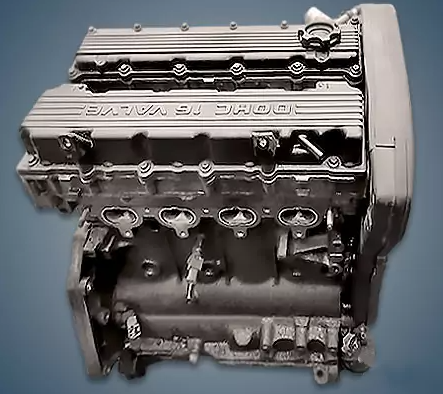
M/T-series engines: 20T4H, 20M4F, and 20T4G.
Specifications
| Production years | 1991-1999 |
| Displacement, cc | 1994 |
| Fuel system | distributed injection |
| Power output, hp | 136 |
| Torque output, Nm | 185 – 190 |
| Cylinder block | cast iron R4 |
| Block head | aluminum 16v |
| Cylinder bore, mm | 84.45 |
| Piston stroke, mm | 88.9 |
| Compression ratio | 10.0 |
| Features | DOHC |
| Hydraulic lifters | yes |
| Timing drive | belt |
| Phase regulator | no |
| Turbocharging | no |
| Recommended engine oil | 5W-30 |
| Engine oil capacity, liter | 5.9 |
| Fuel type | petrol |
| Euro standards | EURO 2 |
| Fuel consumption, L/100 km (for Rover 820 1998) — city — highway — combined |
10.8 7.1 8.2 |
| Engine lifespan, km | ~300 000 |
| Weight, kg | 151.7 |
The engine was installed on:
- Rover 200 II (XW) in 1993 – 1995;
- Rover 400 I (XW) in 1993 – 1995; 400 II (RT) in 1995 – 1999;
- Rover 800 I (XS) in 1991 – 1999;
- Land Rover Discovery 1 (LJ) in 1993 – 1997.
Disadvantages of the Rover 20T4H engine
The primary issue with this motor is poor workmanship, despite its structural reliability.
Second, the erratic MEMS fuel injection system is malfunctioning.
The timing belt is made to last about 100,000 kilometers, and the valves bend when it breaks.
Oil leaks under the camshaft seals and valve covers are common.