
From 1995 to 2005, the company produced the 1.8-liter Rover 18K4K or 1.8 VVC engine, which was fitted to the MG F, TF, or ZR as well as the 200 and 25 series models, including the Coupe based on them. Such a power unit lost up to 192 horsepower on vehicles made by the Lotus and Caterham brands.
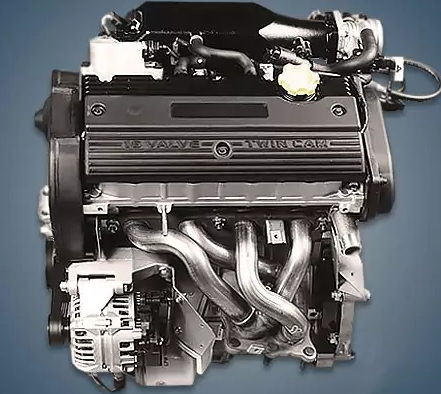
K-series engines include the 11K4F, 14K2F, 14K4F, 16K4F, 18K4F, 18K4K, and 18K4G.
Specifications
| Production years | 1995-2005 |
| Displacement, cc | 1796 |
| Fuel system | distributed injection |
| Power output, hp | 145 – 158 |
| Torque output, Nm | 174 |
| Cylinder block | aluminum R4 |
| Block head | aluminum 16v |
| Cylinder bore, mm | 80 |
| Piston stroke, mm | 89.3 |
| Compression ratio | 10.5 |
| Features | DOHC |
| Hydraulic lifters | yes |
| Timing drive | belt |
| Phase regulator | VVC |
| Turbocharging | no |
| Recommended engine oil | 5W-30 |
| Engine oil capacity, liter | 4.5 |
| Fuel type | petrol |
| Euro standards | EURO 3 |
| Fuel consumption, L/100 km (for Rover Coupe 1998) — city — highway — combined |
9.1 5.4 7.2 |
| Engine lifespan, km | ~270 000 |
| Weight, kg | 110 |
The engine was installed on:
- Rover 200 III (RF) in 1997 – 1999;
- Rover 200 II Coupe (XW) in 1996 – 1998;
- Rover 25 I (RF) in 1999 – 2002;
- MG F in 1995 – 2002;
- MG TF in 2002 – 2005;
- MG ZR in 2001 – 2005.
Disadvantages of the Rover 18K4K engine
This engine’s primary issue is its extreme fear of overheating;
As a result, it frequently leads the head in addition to breaking through the cylinder head gasket;
Additionally, remember to replace the costly, long head bolts each time you remove it;
The valves always bend when the timing belt breaks, which is intended to last 100,000 kilometers;
Ignition coils and short-lived supports are two more of the motor’s flaws.