
From 1998 to 2004, a UK factory assembled the 2.0-liter Rover 20K4N engine, which was fitted to the most well-liked concern models at the time with indexes 45 and 75. This engine had a 150 horsepower capacity and was only available in one version, unlike its older sibling.
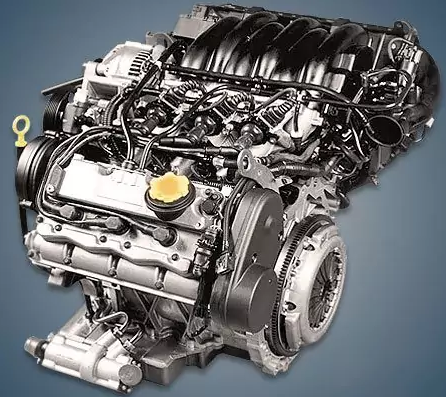
KV6-series engines: 20K4N and 25K4N.
Specifications
| Production years | 1998-2004 |
| Displacement, cc | 1997 |
| Fuel system | distributed injection |
| Power output, hp | 150 |
| Torque output, Nm | 185 |
| Cylinder block | aluminum V6 |
| Block head | aluminum 24v |
| Cylinder bore, mm | 80 |
| Piston stroke, mm | 66.2 |
| Compression ratio | 10.5 |
| Features | VIS |
| Hydraulic lifters | yes |
| Timing drive | belt |
| Phase regulator | no |
| Turbocharging | no |
| Recommended engine oil | 5W-30 |
| Engine oil capacity, liter | 5.2 |
| Fuel type | petrol |
| Euro standards | EURO 3 |
| Fuel consumption, L/100 km (for Rover 45 2000) — city — highway — combined |
12.9 7.6 9.6 |
| Engine lifespan, km | ~240 000 |
| Weight, kg | 177.8 |
The engine was installed on:
- Rover 45 I (RT) in 1999 – 2004;
- Rover 75 I (RJ) in 1998 – 2004.
Disadvantages of the Rover 20K4N engine
This motor has wet liners structurally, which can sag when overheated;
Sagging liners result in an oil and antifreeze mixture, and a significant overhaul is in store for you;
Lubricant seeping into the throttle assembly is another well-known engine issue;
Here, the camshafts are easily damaged if the three-belt timing belt is replaced incorrectly;
A cooling fan, pump, and thermostat are additional weaknesses.