
In 1990, Renault debuted the 1.2-liter, 8-valve E7F engine. With a camshaft in the cylinder head, this motor is a thorough modernization of the Cleon-Fonte internal combustion engine. was installed on the Clio and Renault 19. Its E5F index is unique to its carburetor version.
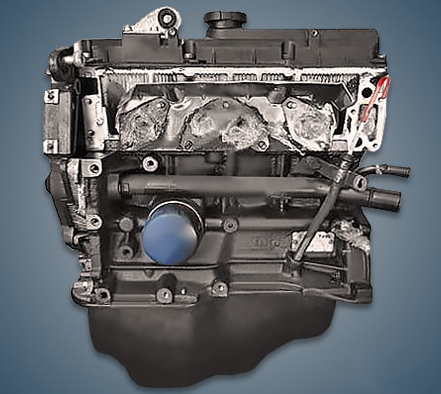
The E7J is another member of the E-series.
The company needed a more modern unit for its compact models by the end of the 1980s because the OHV-type C-series motors were completely out of date. The OHC scheme, which had a camshaft in the cylinder head and a toothed belt connecting it to the crankshaft, was used as the foundation.
The resultant engine was dubbed Energy, signaling the start of a new E-series. By the way, all of the company’s present small-scale power plants are its descendants, with the exception that the cylinder head now has two camshafts.
Because it proved to be too large for such a small volume and power, this gasoline engine was only manufactured for a brief period of time. A comparable 1.2-liter D7F took its place already in the mid-1990s.
The engine was set up on:
- Renault 19 (X53) in 1992 – 1995;
- Renault Clio 1 (X57) in 1990 – 1996.
Specifications
| Production years | 1990-1996 |
| Displacement, cc | 1171 |
| Fuel system | single injection |
| Power output, hp | 54 – 60 |
| Torque output, Nm | 83 – 88 |
| Cylinder block | R4 |
| Block head | 16v |
| Cylinder bore, mm | 75.8 |
| Piston stroke, mm | 64.9 |
| Compression ratio | 9.2 – 9.5 |
| Timing drive | belt |
| Turbocharging | no |
| Fuel type | petrol |
| Euro standards | EURO 1/2 |
| Engine lifespan, km | ~200 000 |
| Weight, kg | 118 |
Disadvantages of the Renault E7F engine
A burned lambda probe, a worn-out fuel pump, a clogged fuel filter, and cracks in the vacuum tubes of the MAP sensor are just a few of the most common causes of the power unit’s unstable operation.
Unadjusted valves are typically the source of noise under the hood. Many sensors, particularly those measuring the temperature of the coolant and incoming air, are prone to malfunctions. While some seals have problems with their tightness, oil leaks are generally not unusual.
Engine tripping is most frequently caused by an ignition distributor malfunction, such as a cracked cover. It’s also worth keeping an eye on the high-voltage wires and candles.