
Only the Renault 21 model was equipped with the carburetor version of the 2.0-liter 8-valve Renault F2R engine, which debuted in 1986. EFI obtained the F3R index following the installation of an electronic monopoint in place of the injection system.
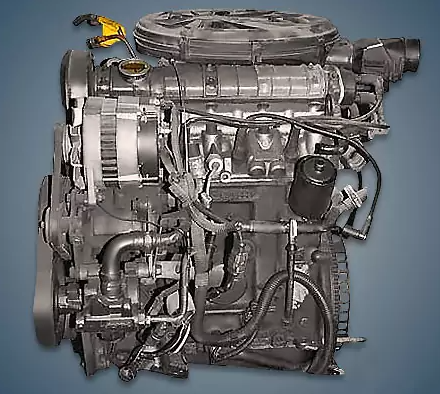
F3P, F4P, F7P, F2R, F3R, F4R, F4Rt, F5R, and F7R are all part of the F-series.
This is a classic because it has an overhead single camshaft, a timing belt drive, a two-chamber carburetor, an aluminum eight-valve head, and a cast-iron block for its time power unit. Valve clearances frequently need to be adjusted because there are no hydraulic lifters.
The engine was mounted on:
- Renault 21 (L48) in 1986 – 1993.
Specifications
| Production years | 1986-1993 |
| Displacement, cc | 1965 |
| Fuel system | carburetor |
| Power output, hp | 90 – 102 |
| Torque output, Nm | 142 – 152 |
| Cylinder block | cast iron R4 |
| Block head | aluminum 8v |
| Cylinder bore, mm | 82 |
| Piston stroke, mm | 93 |
| Compression ratio | 8.4 |
| Hydraulic lifters | no |
| Timing drive | belt |
| Turbocharging | no |
| Fuel type | petrol |
| Euro standards | – |
| Weight, kg | 135 |
Disadvantages of the Renault F2R engine
The first thing to do if your engine stalls, twitches, or sneezes is to check the carburetor. One of the filter meshes or the jets might be clogged.
Owners frequently experience ignition system malfunctions. The candles themselves or the coil and distributor may malfunction. High-voltage wires frequently have oxidized contacts.
Coolant and oil leaks are common in the power unit. Furthermore, it can ooze, drip, and sweat anywhere, making it extremely difficult to identify the most troublesome areas.