
Since 2010, the company has been producing the 2.3-liter Renault M9T or 2.3 dCi diesel engine, which powers the well-known minibuses Renault Master 3, Opel Movano B, and Nissan NV400. This diesel engine has been modified for pickup trucks based on the Nissan Navara and is known by the symbol YS23.
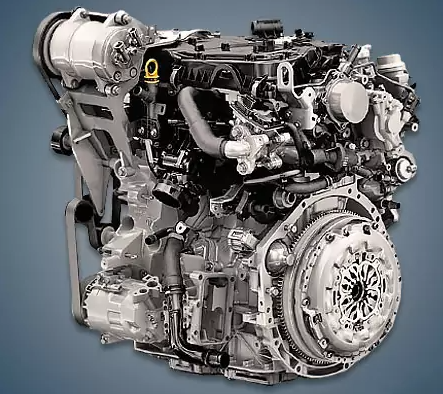
M9R is another diesel in the M-series.
Based on the well-liked 2.0-liter heavy-fuel engine under the M9R index, a new 2.3-liter diesel engine debuted on the third generation of the Master minibus in 2010. A timing chain drive, a Bosch Common Rail fuel system, a 16-valve cylinder head with hydraulic lifters, a cast-iron four-cylinder block, and a turbocharger are all part of the design. Such a device has either a Quickshift ZA4 and ZF4 robot or a 6-speed manual transmission PA0 and PF6.
Although there are nearly a dozen variations of this diesel engine, they can be categorized into multiple groups. First, by type of turbocharger: twin-turbo, variable geometry, and conventional. Second, by generation: the first was released in 2010, the second in 2014, and the third in 2019.
The engine was mounted on:
- Renault Master 3 (X62) since 2010;
- Nissan NV400 1 (X62) since 2010;
- Opel Movano B (X62) since 2010.
Specifications
| Production years | since 2010 |
| Displacement, cc | 2299 |
| Fuel system | Common Rail |
| Power output, hp | 100 – 150 (Single Turbo) 135 – 180 (Twin Turbo) |
| Torque output, Nm | 285 – 350 (Single Turbo) 340 – 400 (Twin Turbo) |
| Cylinder block | cast iron R4 |
| Block head | aluminum 16v |
| Cylinder bore, mm | 85 |
| Piston stroke, mm | 101.3 |
| Compression ratio | 15.1 – 16.0 |
| Hydraulic lifters | yes |
| Timing drive | chain |
| Turbocharging | yes |
| Recommended engine oil | 5W-30, 5W-40 |
| Engine oil capacity, liter | 8.8 |
| Fuel type | diesel |
| Euro standards | EURO 4/5/6 |
| Fuel consumption, L/100 km (for Renault Master 2012) — city — highway — combined |
9.6 7.3 8.1 |
| Engine lifespan, km | ~400 000 |
| Weight, kg | 217 |
Disadvantages of the Renault M9T engine
Water frequently gets on the cylinder head due to design flaws, causing the nozzles to become sour. Rust typically flows straight into the engine block when the injectors are disassembled, where it acts as a mold. This frequently results in teases and the appearance of an oil burner.
One of the most well-known issues with this motor is its timing chain, which occasionally stretches and needs to be replaced after 100–150 thousand kilometers of operation.
This is a contemporary diesel engine with a coke-loving EGR valve and, in most versions, a particulate filter with limited resources.
Additionally, this unit frequently has air leaks and the intercooler pipe flies.