
From 2002 to 2010, Isuzu sold the 3.0-liter Renault P9X or 3.0 dci diesel engine, which was fitted to the biggest concern models at the time, including the Vel Satis and Espace. Isuzu 6DE1 is the name of this diesel, which is also referred to as Saab D308L, Opel Y30DT, or Z30DT.
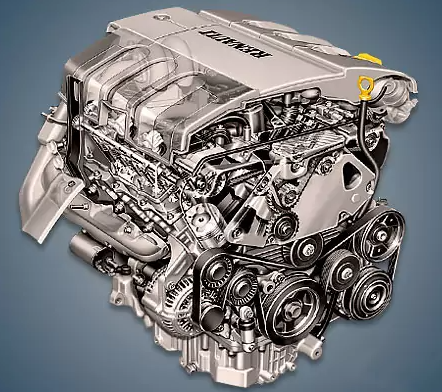
General Motors, an American company, commissioned Isuzu to create a potent diesel engine for its esteemed European models, the Saab 9-5 and Opel Vectra, in the late 1990s. The Renault Espace and Vel Satis quickly adopted the new motor after it was unveiled in 2001. This all-aluminum engine has a closed cooling jacket, cast-iron sleeves, two DOHC cylinder heads, a Common Rail Denso fuel system, a variable geometry turbine, and a combined timing drive that uses belt camshafts and gears to drive the pump and injection pump.
Complaints about the motor’s frequent overheating and block cracking appeared almost immediately. The issue was identified by official dealers, who even replaced damaged engines while they were still under warranty. This diesel engine was updated in 2005 and is free of these issues.
The engine was mounted on:
- Renault Espace 1 (J11) in 2002 – 2010;
- Renault Vel Satis 1 (B73) in 2002 – 2009.
Specifications
| Production years | 2002-2010 |
| Displacement, cc | 2958 |
| Fuel system | Common Rail |
| Power output, hp | 177 (1 gen. P9X 701) 181 (2 gen. P9X 715) |
| Torque output, Nm | 350 (1 gen. P9X 701) 400 (2 gen. P9X 715) |
| Cylinder block | aluminum V6 |
| Block head | aluminum 24v |
| Cylinder bore, mm | 87.5 |
| Piston stroke, mm | 82 |
| Compression ratio | 18.5 |
| Hydraulic lifters | no |
| Timing drive | gears + belt |
| Turbocharging | yes |
| Recommended engine oil | 5W-30, 5W-40 |
| Engine oil capacity, liter | 8.5 |
| Fuel type | diesel |
| Euro standards | EURO 3 (1 gen. P9X 701) EURO 4 (2 gen. P9X 715) |
| Fuel consumption, L/100 km (for Renault Espace 2006) — city — highway — combined |
12.5 7.6 9.4 |
| Engine lifespan, km | ~250 000 |
| Weight, kg | 235 |
Disadvantages of the Renault P9X engine
From 2001 to 2005, diesel power units experienced frequent overheating, which resulted in block cracks, sleeve subsidence, antifreeze seeping into the exhaust manifold, head bending, and even expansion tank and cooling radiator ruptures.
In this engine, the mass fuel flow sensor and camshaft sensors frequently malfunction, particularly after the belt is replaced. A sudden decline in engine thrust indicates its failure.
Other malfunctions include the exhaust manifold burning out, the EGR valve rapidly coking, and the mechanism for altering the turbine’s geometry frequently wedging.