
A brand-new sports engine known as the S38B36 was created specifically for the 1988 release of the BMW M5 E34. The aspirated M88/3 (S38B35) served as the model for this engine; it shares less with its sibling, the M30B34.
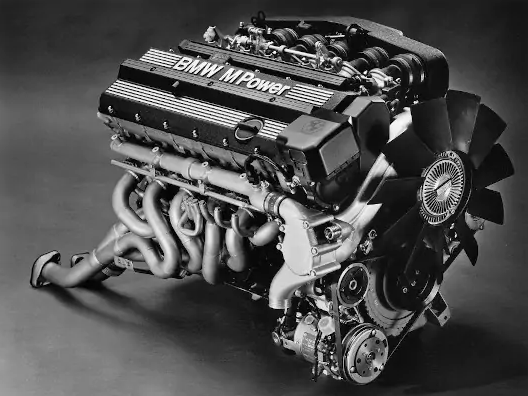
The M88/3 cylinder block had a lightweight forged crankshaft with 12 counterweights and a piston stroke of 86 mm (it was 84 mm). The pistons were altered to have a compression height of 31.5 mm, a compression ratio of 10, and a connecting rod length of 144 mm, while the cylinder diameter stayed constant at 93.4 mm.
The BMW S38 has a two-shaft, 24-valve cylinder head with mechanical pushers. Valve adjustments are made as needed, with cold clearances of 0.28 and 0.33 mm. S38B36 camshaft specifications: lift 10.7 mm, phase 264/110. The exhaust and intake valves are 32 mm and 37 mm, respectively. The intake features six throttles, one for each cylinder, and a variable geometry manifold. Each throttle has a diameter of 46 mm. The nozzles can hold 270 cc.
Bosch Motronic M1.2 control unit. An equal-length collector is utilized at the outlet. A double-row chain, which is very dependable, is used by the timing drive.
These developments allowed for the removal of 316 horsepower at 6900 rpm.
Specifications
| Manufacturer | Munich Plant |
| Also called | S38 |
| Production years | 1988-1996 |
| Cylinder block alloy | cast iron |
| Fuel system | injector |
| Configuration | inline |
| Number of cylinders | 6 |
| Valves per cylinder | 4 |
| Piston stroke, mm | 86 |
| Cylinder bore, mm | 93.4 |
| Compression ratio | 10.0 |
| Displacement, cc | 3535 |
| Power output, hp | 316 /6900 rpm |
| Torque output, Nm / rpm | 360 /4750 rpm |
| Fuel type | petrol |
| Weight, kg | ~151 |
| Fuel consumption, L/100 km — city — highway — combined |
18.0 8.3 9.6 |
| Oil consumption, gr/1000 km | up to 1000 |
| Recommended engine oil | 5W-30 / 5W-40 / 10W-40 / 15W-40 |
| Engine oil capacity, liter | 5.75 |
| Normal engine operating temperature, °C | ~90 |
| Engine lifespan, km | ~400 000 |
Disadvantages of the S38B36 engine
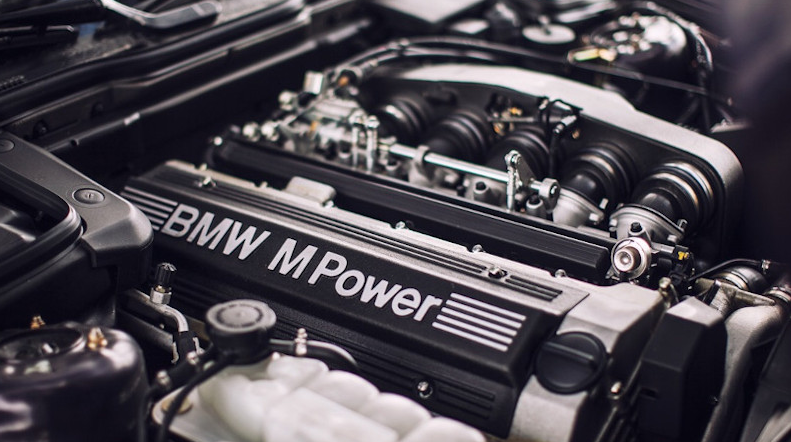
The BMW S38 engine’s primary issues are overheating and cylinder block cracks. Around the cylinder head bolt threads, cracks appear. The motor’s disassembly and oil that hasn’t been removed from the thread are the causes of the breakdown. The high antifreeze consumption and the emergence of an emulsion in the oil can be used to diagnose the issue. Replacing it with a non-cracked block is the best course of action.
If overheating happens, the issue needs to be resolved right away to prevent the cylinder head from moving. Overheating happens when there is a blockage in the cooling system or when a thermostat, radiator, or pump needs to be cleaned.
Wear on the gas distribution system’s components, as well as the intricacy and difficulty of adjusting the valve, are common malfunctions. Eccentrics, guide bushings, and valves are replaced to address the issue. The MAF may be connected to poor performance. A whistle is heard as the car warms up, and the rear crankshaft oil seal frequently leaks.