
From 2006 to 2016, the company produced the 3.0-liter BMW N54B30 turbocharged petrol engine, which was fitted on several well-known models, including the 1-Series, 3-Series, 5-Series, 7-Series, and X6 crossover. Alpina actively used this unit in the production of their heavy-duty motors.
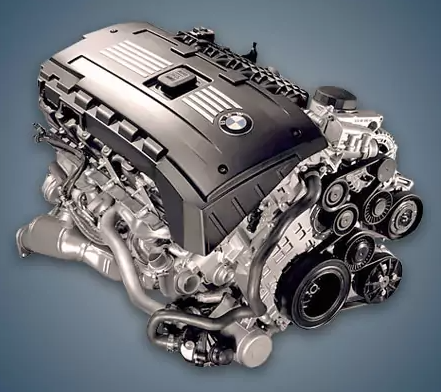
The engine was installed on:
- BMW 1-Series E87 in 2007 – 2012;
- BMW 3-Series E90 in 2006 – 2010;
- BMW 5-Series E60 in 2007 – 2010;
- BMW 7-Series F01 in 2008 – 2012;
- BMW X6 E71 in 2008 – 2010;
- BMW Z4 E89 in 2009 – 2016.
Specifications
| Production years | 2006-2016 |
| Displacement, cc | 2979 |
| Fuel system | direct injection |
| Power output, hp | 306 (N54B30O0) 326 – 340 (N54B30T0) |
| Torque output, Nm | 400 (N54B30O0) 450 (N54B30T0) |
| Cylinder block | aluminum R6 |
| Block head | aluminum 24v |
| Cylinder bore, mm | 84 |
| Piston stroke, mm | 89.6 |
| Compression ratio | 10.2 |
| Features | no |
| Hydraulic lifters | yes |
| Timing drive | chain |
| Phase regulator | double VANOS |
| Turbocharging | Bi-Turbo |
| Recommended engine oil | 5W-30 |
| Engine oil capacity, liter | 6.5 |
| Fuel type | petrol |
| Euro standards | EURO 5 |
| Fuel consumption, L/100 km (for BMW 740i 2010) — city — highway — combined |
13.8 7.6 9.9 |
| Engine lifespan, km | ~250 000 |
Disadvantages of the N54B30 engine
The direct fuel injection system is the primary cause of the engine’s issues;
High pressure fuel pumps and injectors may need to be replaced considerably sooner than 100,000 kilometers of operation;
The low pressure valve in engines manufactured prior to 2010 frequently failed; two Mitsubishi TD03-10TK3 turbines are another noteworthy resource in this regard.
Modern electric pumps often malfunction at the worst possible time.