
The 4-cylinder BMW M44B19 engine, which was manufactured from 1996 to 2001, took the place of the M42B18 engine. In comparison to the M42, the M44’s engine, control system, and outlet system have all undergone significant design modifications. This power unit has emerged as a leader in the BMW four-cylinder engine program.
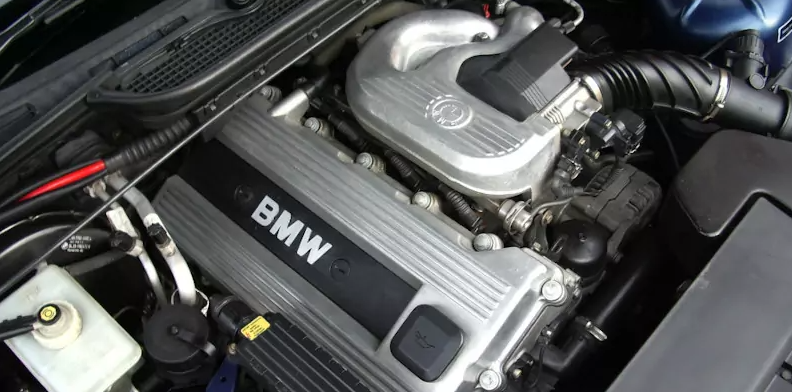
This engine’s cylinder diameter was increased to 85 mm, new pistons were used, a new crankshaft with an 83.5 stroke was installed, and connecting rods were made lighter.
A new cylinder head with a redesigned valve drive takes care of all of this. The intake and exhaust valves’ diameters (33 and 30.5 mm) did not change, nor did the hydraulic lifters. Standard M44 camshaft characteristics include phase 240/244 and lift 9.7/9.7. After the pump was upgraded, it ceased to operate. A DISA length change system was installed in the intake manifold, and the intake was entirely redesigned. Bosch DME M5.2 has taken the place of the engine management system.
Specifications
| Production years | 1996-2001 Munich Plant |
| Displacement, cc | 1895 |
| Fuel system | injector |
| Power output, hp | 140 /6000 rpm |
| Torque output, Nm | 180 /4300 rpm |
| Cylinder block | cast iron R4 |
| Block head | aluminum 16v |
| Cylinder bore, mm | 85 |
| Piston stroke, mm | 83.5 |
| Compression ratio | 10.0 |
| Hydraulic lifters | yes |
| Timing drive | belt |
| Turbocharging | no |
| Recommended engine oil | 0W-30 / 0W-40 / 5W-30 / 5W-40 / 10W-40 / 15W-50 |
| Engine oil capacity, liter | 5.0 |
| Fuel type | petrol |
| Euro standards | EURO 3 |
| Fuel consumption, L/100 km (for 318is E36) — city — highway — combined |
11.0 6.1 8.0 |
| Engine lifespan, km | ~300 000 |
Disadvantages of the M44B19 engine
Turn on the motor by knocking. A worn camshaft or hydraulic lifters and rocker arms are the primary cause of the M44’s characteristic issue.
variation in RPM. The mass air flow sensor air duct must be examined for depressurization and cracks. Additionally, you must inspect the throttle, lambda probe, idle valve, and mass air flow sensor itself. In addition to all of this, the deterioration of the camshaft rotation could conceal the issue.
power loss when accelerating. Clogged nozzles are the cause. They must be cleaned.
An increase in the temperature during operation. First, look for air congestion in the cooling system, pump, radiator, thermostat, and plastic pipes.
No ignition. Examine the spark plugs, overvoltage conductors, ignition coil, and fuel pump.
It is important to keep in mind that the M44’s timing belts are not very dependable. Furthermore, the unit is already quite old. Despite this, the motor itself has a resource of at least 300,000 kilometers and is fairly stable. Unfortunately, there won’t be a completely trouble-free operation because today there isn’t a single copy that wouldn’t have reached this milestone.