
From 2003 until 2017, the Rolls-Royce Phantom was equipped with the N73B68 engine (some sources claim it was N73B67). This massive engine has a V-shaped layout, 12 cylinders, and a capacity of 6749 cc. Both the cylinder head and the engine block are composed of aluminum, and each cylinder block has two camshafts.
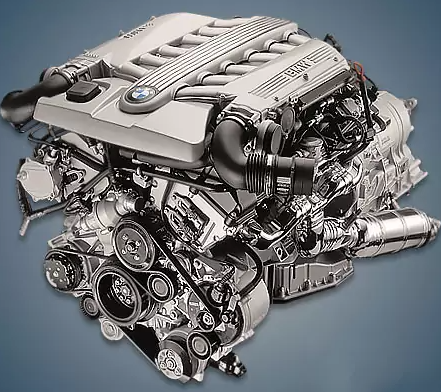
Other modifications of N73: N73B60.
The engine was installed on:
- Rolls-Royce Phantom 7 (RR1) in 2003 – 2017.
Specifications
| Production years | 2003-2017 |
| Displacement, cc | 6749 |
| Fuel system | direct injection |
| Power output, hp | 460 |
| Torque output, Nm | 720 |
| Cylinder block | aluminum V12 |
| Block head | aluminum 48v |
| Cylinder bore, mm | 92 |
| Piston stroke, mm | 84.6 |
| Compression ratio | 11.0 |
| Features | Valvetronic |
| Hydraulic lifters | yes |
| Timing drive | chain |
| Phase regulator | double VANOS |
| Turbocharging | no |
| Recommended engine oil | 5W-40 |
| Engine oil capacity, liter | 8.5 |
| Fuel type | petrol |
| Euro standards | EURO 4/5 |
| Engine lifespan, km | ~330 000 |
Disadvantages of the N73B68 engine
Rapid coking brought on by the direct injection system is the primary issue;
Here, the Double VANOS system is a limited resource, occasionally covering less than 150,000 km;
Even now, vibrations at low speeds are frequently caused by a malfunctioning valvetronic; after 150,000 kilometers of running, they frequently stretch here and necessitate replacing the timing chain;
This motor’s propensity for leaks and high oil consumption are further flaws.