
Produced from 1998 to 2007, the 2.0-liter BMW M47 diesel engine – later renamed the M47TU – was fitted to the company’s largest models, including the 1-Series, 3-Series, 5-Series, and X3. This motor was available for Rover and Land Rover vehicles under the M47R index.
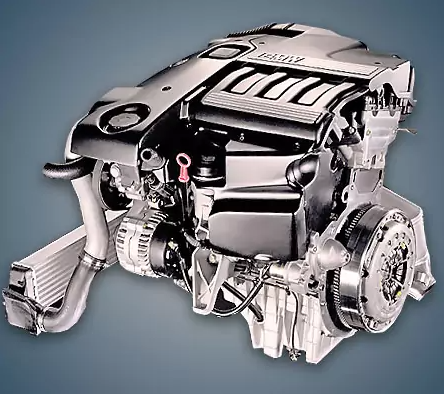
The engine was installed on:
- BMW 1-Series E87 in 2004 – 2007;
- BMW 3-Series E46 in 1998 – 2006; 3-Series E90 in 2005 – 2007;
- BMW 5-Series E39 in 2000 – 2004; 5-Series E60 in 2005 – 2007;
- BMW X3 E83 in 2004 – 2007.
Specifications
| Production years | 1998-2007 |
| Displacement, cc | 1951 (M47D20) 1995 (M47D20TU, M47D20TU2) |
| Fuel system | direct injection (M47D20) Common Rail (M47TU, M47TU2) |
| Power output, hp | 116 – 136 (M47D20) 116 – 150 (M47TU) 122 – 163 (M47TU2) |
| Torque output, Nm | 265 – 280 (M47D20) 280 – 330 (M47TU) 280 – 340 (M47TU2) |
| Cylinder block | cast iron R4 |
| Block head | aluminum 16v |
| Cylinder bore, mm | 84 |
| Piston stroke, mm | 88 (M47D20) 90 (M47TU, M47TU2) |
| Compression ratio | 19.0 (M47D20) 17.0 (M47TU, M47TU2) |
| Features | intercooler |
| Hydraulic lifters | yes |
| Timing drive | chain |
| Phase regulator | no |
| Turbocharging | yes |
| Recommended engine oil | 5W-40 (M47D20) 5W-30 (M47TU, M47TU2) |
| Engine oil capacity, liter | 5.0 (M47D20) 5.2 (M47TU, M47TU2) |
| Fuel type | diesel |
| Euro standards | EURO 3 (M47D20) EURO 4 (M47TU, M47TU2) |
| Fuel consumption, L/100 km (for BMW 320d 2002) — city — highway — combined |
7.5 4.3 5.5 |
| Engine lifespan, km | ~350 000 |
Disadvantages of the M47D20 engine
Several diesel models have intake flaps that can drop into the cylinders.
When the crankshaft pulley is destroyed after 100,000 kilometers, a branded engine failure occurs.
An ECU failure is frequently caused by the power unit’s prolonged overheating.
Although it depends on the quality of the oil used, this fuel system is dependable.
Crankshaft failure and oil starvation are caused by using subpar lubricant.