
The N53 family, which also included the N53B25, is represented by the 3-liter N53B30 engine, which debuted in 2007 and took the place of the N52B30 of the same size. The engine is a modified N52 with a new piston and cylinder head, a direct fuel injection system, the removal of the confusing Valvetronic valve lift system, and a Siemens MSD81 engine management system.
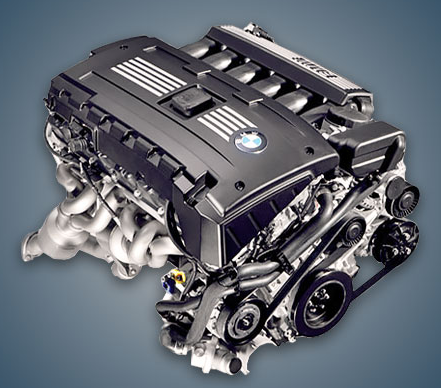
BMW N53B30 engine modifications
- The base engine N53B30U0 (2007–2011) produces 218 horsepower at 6100 rpm and 270 Nm of torque at 2400–4200 rpm. for versions that have index 25i.
- The N53B30 (2010–2013) model has 204 horsepower at 6700 rpm and 270 Nm of torque at 1500–4250 rpm. Regarding the BMW F10 523i.
- An analog of the base engine, the N53B30O0 (2007–2013) has a different, full-fledged intake manifold and produces 272 horsepower at 6700 rpm and 320 Nm of torque at 2750–3000 rpm. For versions that have index 30i.
- The BMW F10 528i’s N53B30 (2010–2009) version has 258 horsepower at 6100 rpm and 310 Nm of torque at 1600–4250 rpm.
Specifications
| Production years | 2007-2013 |
| Displacement, cc | 2996 |
| Fuel system | direct injection |
| Power output, hp | 204 – 218 (N53B30UL) 258 – 272 (N53B30OL) |
| Torque output, Nm | 270 (N53B30UL) 310 – 320 (N53B30OL) |
| Cylinder block | aluminum R6 |
| Block head | aluminum 24v |
| Cylinder bore, mm | 85 |
| Piston stroke, mm | 88 |
| Compression ratio | 12.0 |
| Features | no |
| Hydraulic lifters | yes |
| Timing drive | chain |
| Phase regulator | double VANOS |
| Turbocharging | no |
| Recommended engine oil | 5W-30 |
| Engine oil capacity, liter | 6.5 |
| Fuel type | petrol |
| Euro standards | EURO 5 |
| Fuel consumption, L/100 km (for BMW 530i 2008) — city — highway — combined |
12.6 6.6 8.8 |
| Engine lifespan, km | ~300 000 |
Disadvantages of the N53B30 engine
The N53’s motor version has no particular issues. Its primary issues include the high-pressure fuel pump’s limited lifespan of 100,000 kilometers, spark plugs that only last 10,000 kilometers, ignition coils that frequently fail after 50,000 kilometers of operation, and high pressure nozzles that only last 100,000 kilometers.
Monitoring the cooling system, inspecting and cleaning the radiator to prevent overheating, and continuously checking the quality of the oils and gasoline poured in are some of the primary steps to prevent engine breakdowns during operation. This version of the unit has a better overall resource than the N52B25, and there are no issues related to higher oil consumption.