
Since 2004, factories in the USA and Japan have assembled the 3.5-liter V6 Toyota 2GR-FE engine, which is installed in front and all-wheel drive vehicles with a transverse engine. Models like the Camry, Avalon, Sienna, Venza, and Lexus are well-known for this unit.
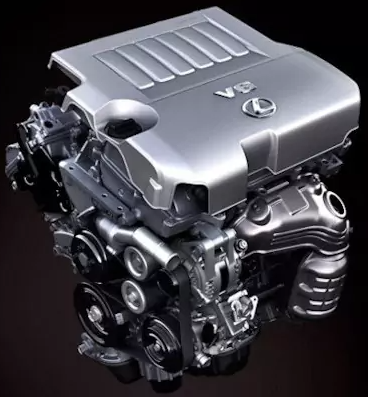
A 3.5-liter V6 engine, designed for front-wheel drive and all-wheel drive models on the K or New MC platform, made its debut on the well-liked Avalon sedan in the US at the end of 2004. This V-shaped six has a 60° camber angle, distributed fuel injection, two DOHC cylinder heads with hydraulic compensators, an aluminum block with cast-iron sleeves, a timing chain drive, and a VVT-i phase control system on every camshaft.
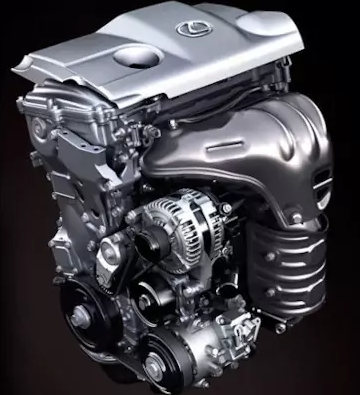
A DIS-6 ignition system with individual coils, an ETCS electric throttle, an intake manifold with an ACIS geometry change system, and piston cooling oil nozzles are also shown here.
The engine was mounted on:
- Toyota Alphard 2 (AH20) in 2008 – 2015; Alphard 3 (AH30) in 2015 – 2017;
- Toyota Aurion 1 (XV40) in 2006 – 2012;
- Toyota Avalon 3 (XX30) in 2004 – 2012; Avalon 4 (XX40) in 2012 – 2018;
- Toyota Blade 1 (E150) in 2007 – 2012;
- Toyota Camry 6 (XV40) in 2006 – 2011; Camry 7 (XV50) in 2011 – 2018;
- Toyota Harrier 2 (XU30) in 2006 – 2009;
- Toyota Highlander 2 (XU40) in 2007 – 2013; Highlander 3 (XU50) in 2013 – 2016;
- Toyota Mark X ZiO 1 (NA10) in 2007 – 2013;
- Toyota Previa 3 (XR50) in 2006 – 2019;
- Toyota RAV4 3 (XA30) in 2005 – 2012;
- Toyota Sienna 2 (XL20) in 2006 – 2009; Sienna 3 (XL30) in 2010 – 2017;
- Toyota Venza 1 (GV10) in 2008 – 2016;
- Lexus ES350 5 (XV40) in 2006 – 2012; ES350 6 (XV60) in 2012 – 2018;
- Lexus RX350 2 (XU30) in 2006 – 2009; RX350 3 (AL10) in 2008 – 2015;
- Lotus Emira 1 since 2021;
- Lotus Evora 1 in 2009 – 2021;
- Lotus Exige 3 in 2012 – 2021.
Specifications
| Production years | since 2004 |
| Displacement, cc | 3456 |
| Fuel system | distributed injection |
| Power output, hp | 250 – 280 |
| Torque output, Nm | 330 – 350 |
| Cylinder block | aluminum V6 |
| Block head | aluminum 24v |
| Cylinder bore, mm | 94 |
| Piston stroke, mm | 83 |
| Compression ratio | 10.8 |
| Hydraulic lifters | yes |
| Timing drive | chain |
| Phase regulator | VVT-i |
| Turbocharging | no |
| Recommended engine oil | 5W-20, 5W-30 |
| Engine oil capacity, liter | 6.1 |
| Fuel type | petrol |
| Euro standards | EURO 4/5 |
| Fuel consumption, L/100 km (for Toyota Camry 2015) — city — highway — combined |
13.2 7.0 9.3 |
| Engine lifespan, km | ~400 000 |
| Weight, kg | 163 |
Disadvantages of the 2GR-FE engine
Up until 2010, engines had a rubber component in the oil supply line to the phase regulators that could burst, causing the unit to lose lubrication until the liners turned. Dealers only replaced the rubber hose, but purchasing an entire aluminum tube is preferable.
Owners frequently hear the phase regulators crackling when they start their cars, but many continue to drive in this manner even though the clutch is broken and the vehicle is unstable. Many people find that replacing sprockets is helpful, but purchasing new clutches is frequently necessary. VVT-i control valves were frequently replaced under warranty in engines up until 2011.
Up until 2011, dealers even replaced the entire throttle assembly in this engine because the throttle valve becomes dirty rather quickly and the idle speed begins to float. Additionally, a tank filter and clogged nozzles may be the source of unstable operation.
Unreliable ignition coils, a short-lived overrunning generator clutch, and a water pump that leaks even after 50,000 kilometers are some of this power unit’s other flaws. Leaks at the cylinder head joints were a common issue in engines prior to 2007.