
Only two models—the Hilux pickup truck in the rear of the N50 and the 4Runner SUV in the rear of the N60—were equipped with the 2.4-liter Toyota 22R-TE turbo engine, which was manufactured at a factory in Japan between 1985 and 1988. This power unit is extremely uncommon and is hardly ever found.
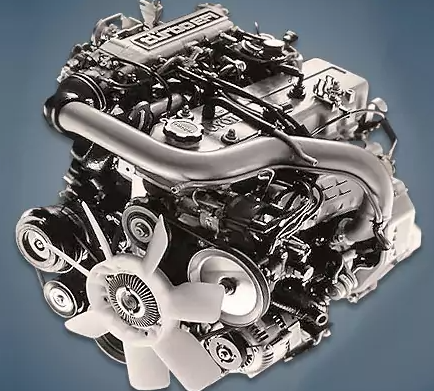
The 22R and 22R-E engines are also part of the R family.
The engine was mounted on:
- Toyota 4Runner 1 (N60) in 1986 – 1988;
- Toyota Hilux 4 (N50) in 1985 – 1988.
Specifications
| Production years | 1985-1988 |
| Displacement, cc | 2366 |
| Fuel system | injector |
| Power output, hp | 137 |
| Torque output, Nm | 234 |
| Cylinder block | cast iron R4 |
| Block head | aluminum 8v |
| Cylinder bore, mm | 92 |
| Piston stroke, mm | 89 |
| Compression ratio | 7.5 |
| Features | SOHC |
| Hydraulic lifters | no |
| Timing drive | chain |
| Phase regulator | no |
| Turbocharging | yes |
| Recommended engine oil | 5W-30 |
| Engine oil capacity, liter | 4.5 |
| Fuel type | petrol |
| Euro standards | EURO 2 |
| Fuel consumption, L/100 km (for Toyota 4Runner 1987) — city — highway — combined |
20.5 10.9 14.7 |
| Engine lifespan, km | ~420 000 |
| Weight, kg | 175 |
Disadvantages of the 22R-TE engine
First of all, since this turbo engine is extremely uncommon, service and replacement parts issues will arise;
Its high fuel consumption—up to 25 liters in the city—is thought to be its second drawback.
The ignition system is another weakness; the distributor typically fails here;
The timing chain is frequently pulled here during lengthy runs, and the turbine powers the oil;
Every 100,000 kilometers, the valves must be adjusted because there are no hydraulic lifters.