
One of the engines in the Cyclone V6 family is the 6G74. From 1992 until 2021, a Japanese factory assembled the Mitsubishi 6G74 3.5-liter V6 engine, which was used in Hyundai’s G6CU and on models like the L200, Pajero, and Pajero Sport.
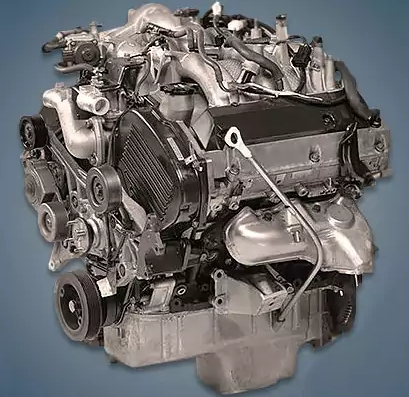
The 6G72, another family model, served as the foundation for the engine’s development. It has shown itself to be incredibly dependable, affordable, and simple to maintain. Car owners adore this power unit because of its outstanding performance.
This engine is structurally a V-shaped engine with two aluminum 24-valve cylinder heads with hydraulic compensators (in SOHC or DOHC versions), a timing belt drive, and a cast-iron block with a 60° cylinder camber angle. Distributed fuel injection was a feature of the engine’s initial iterations. This power unit’s direct fuel injection version debuted in 1997, making it the first engine to use the GDI system before it spread widely. Additionally, a very uncommon change was made to the exclusive MIVEC phase control system.
The engines 6G71, 6G72, 6G72TT, 6G73, and 6G75 are also part of the 6G7 family.
The engine was mounted on:
- Mitsubishi Debonair 3 (S2) in 1992 – 1999;
- Mitsubishi Diamante 2 (F3) in 1997 – 2004;
- Mitsubishi L200 4 (KB) in 2005 – 2014;
- Mitsubishi Magna 3 (TE) in 1999 – 2005;
- Mitsubishi Pajero Sport 1 (K90) in 1999 – 2008; Pajero Sport 2 (KH) in 2008 – 2011;
- Mitsubishi Pajero 2 (V30) in 1993 – 2000; Pajero 3 (V70) in 1999 – 2006; Pajero 4 (V90) in 2006 – 2021;
- Mitsubishi Proudia 1 (S3) in 1999 – 2001.
Specifications
| Production years | 1992-2021 |
| Displacement, cc | 3497 |
| Fuel system | distributed injection (6G74 MPI SOHC) distributed injection (6G74 MPI DOHC) distributed injection (6G74 MPI DOHC MIVEC) direct injection (6G74 GDI DOHC) |
| Power output, hp | 180 – 225 (6G74 MPI SOHC) 210 – 230 (6G74 MPI DOHC) 260 – 280 (6G74 MPI DOHC MIVEC) 200 – 245 (6G74 GDI DOHC) |
| Torque output, Nm | 300 – 320 (6G74 MPI SOHC) 300 – 330 (6G74 MPI DOHC) 340 – 350 (6G74 MPI DOHC MIVEC) 320 – 345 (6G74 GDI DOHC) |
| Cylinder block | cast iron V6 |
| Block head | aluminum 24v |
| Cylinder bore, mm | 93 |
| Piston stroke, mm | 85.8 |
| Compression ratio | 9.5 (6G74 MPI SOHC) 10 (6G74 MPI DOHC) 10 (6G74 MPI DOHC MIVEC) 10.4 (6G74 GDI DOHC) |
| Hydraulic lifters | yes |
| Timing drive | belt |
| Turbocharging | no |
| Recommended engine oil | 5W-30, 5W-40 |
| Engine oil capacity, liter | 5.7 |
| Fuel type | petrol |
| Euro standards | EURO 2/3 (6G74 MPI SOHC) EURO 3/4 (6G74 MPI DOHC) EURO 4 (6G74 MPI DOHC MIVEC) EURO 4/5 (6G74 GDI DOHC) |
| Fuel consumption, L/100 km (for Mitsubishi Pajero GDI 2004) — city — highway — combined |
17.4 10.8 13.2 |
| Engine lifespan, km | ~400 000 |
| Weight, kg | 210 |
Disadvantages of the Mitsubishi 6G74 engine
The common versions of the engine with the GDI direct injection system are not as demanding on fuel quality as modifications of the engine with distributed injection. The availability of injection pumps and capricious nozzles is advantageous.
Many versions of this engine have swirl flaps installed in the intake manifold. These flaps frequently get dirty and wedged after 100,000 kilometers, and their bolts can come loose and fall directly into the cylinders. This frequently culminates in the hunt for a contract unit.
Many reviews from owners of SUVs with such engines that have crankshaft liners can be found on specialized forums. This primarily pertains to engines manufactured prior to 2009. The degree of lubrication and, in particular, the state of the oil pump have a significant impact on this motor.
Hydraulic compensators and the timing drive’s hydraulic tensioner are the unit’s weak points. At 100,000 kilometers, they become clogged with oil deposits and might need to be replaced. Additionally, the throttle, idle speed controller, or injectors are contaminated, which is why the rpm is continuously floating here.