
From 1995 until 2001, the Mitsubishi 4A31 1.1-liter gasoline engine was manufactured in Japan and fitted to regional kei vehicles, such as the well-liked Pajero Junior. The unit was modified with direct fuel injection in addition to its injection version.
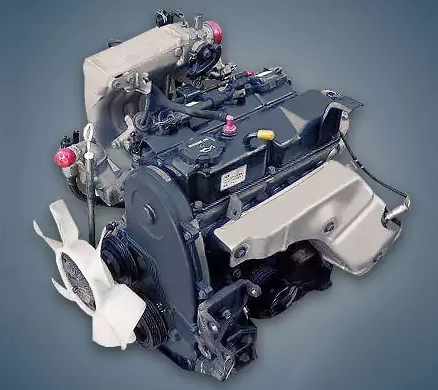
The 4A30 engine is another member of the 4A3 family.
The engine was mounted on:
- Mitsubishi Pajero Junior (H57) in 1995 – 1998;
- Mitsubishi Pistachio H44 in 1999 – 2000;
- Mitsubishi Toppo BJ Wide H43A in 1999 – 2001;
- Mitsubishi Town Box Wide U65 in 1999 – 2001.
Specifications
| Production years | 1995-2001 |
| Displacement, cc | 1094 |
| Fuel system | distributed injection (4A31 ECI) direct injection (4A31 GDI) |
| Power output, hp | 78 (4A31 ECI) 74 (4A31 GDI) |
| Torque output, Nm | 103 (4A31 ECI) 100 (4A31 GDI) |
| Cylinder block | cast iron R4 |
| Block head | aluminum 16v |
| Cylinder bore, mm | 66 |
| Piston stroke, mm | 80 |
| Compression ratio | 9.5 (4A31 ECI) 11.0 (4A31 GDI) |
| Features | SOHC (4A31 ECI) DOHC (4A31 GDI) |
| Hydraulic lifters | no |
| Timing drive | belt |
| Phase regulator | no |
| Turbocharging | no |
| Recommended engine oil | 5W-30 |
| Engine oil capacity, liter | 3.5 |
| Fuel type | petrol |
| Euro standards | EURO 2/3 (4A31 ECI) EURO 4 (4A31 GDI) |
| Fuel consumption, L/100 km (for Mitsubishi Pajero Junior 1997) — city — highway — combined |
9.0 5.5 6.9 |
| Engine lifespan, km | ~220 000 |
| Weight, kg | 105 |
Disadvantages of the Mitsubishi 4A31 engine
If the bolts are overtightened, the aluminum head is prone to overheating and cracking;
The unit begins to vibrate as soon as the engine mounts wear out;
The valves always bend here when the timing belt breaks because it is made for 90,000 kilometers;
The thermal clearances of the valves must be adjusted about every 50,000 kilometers;
The rings or caps typically wear out after 90,000 kilometers, at which point the oil burn starts.