
Produced since 2006, the Mitsubishi 6B31 3.0-liter V-shaped 6-cylinder engine is only found in two popular models: the Pajero Sport SUV and the Outlander crossover. This power unit is regarded as the best in the Japanese company’s line of gasoline engines.
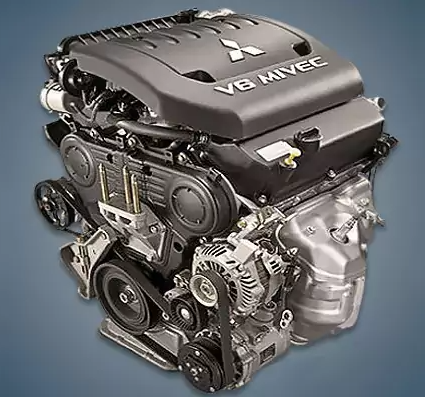
The engine was installed on:
- Mitsubishi Outlander CW in 2006 – 2012;
- Mitsubishi Outlander GF since 2012;
- Mitsubishi Pajero Sport KH in 2010 – 2015;
- Mitsubishi Pajero Sport KS since 2015.
Specifications
| Production years | since 2006 |
| Displacement, cc | 2998 |
| Fuel system | injector |
| Power output, hp | 220 – 230 |
| Torque output, Nm | 276 – 291 |
| Cylinder block | aluminum V6 |
| Block head | aluminum 24v |
| Cylinder bore, mm | 87.6 |
| Piston stroke, mm | 82.9 |
| Compression ratio | 9.5-10.5 |
| Features | no |
| Hydraulic lifters | at exhaust camshaft |
| Timing drive | belt |
| Phase regulator | MIVEC |
| Turbocharging | no |
| Recommended engine oil | 5W-30 |
| Engine oil capacity, liter | 4.5 |
| Fuel type | petrol |
| Euro standards | EURO 4 |
| Fuel consumption, L/100 km (for Mitsubishi Outlander 2011) — city — highway — combined |
15.1 8.0 10.6 |
| Engine lifespan, km | ~300 000 |
| Weight, kg | 170 |
Disadvantages of the Mitsubishi 6B31 engine
There was a recall to replace the intake manifold flap on engines from the initial years of production.
The most dangerous issue is the drop in oil pump performance to 120 thousand kilometers; the engine frequently experiences leaks, which are typically caused by cracked valve covers; the timing belt’s 90,000-kilometer lifespan can be significantly shortened if oil gets on it;
The camshafts and their bed are typically already worn out after a run of more than 200–250 thousand kilometers; the power unit supports last up to 50,000 kilometers; the catalyst crumbles after 150,000 kilometers; and the engine wedges if the hydraulic lifters knock.