
Only the Japanese army SUV known as the Jeep was equipped with the 2.4-liter Mitsubishi 4G53 or G53B gasoline engine, which was manufactured between 1975 and 1998. Only enthusiasts of challenging off-road vehicles are familiar with this power unit.
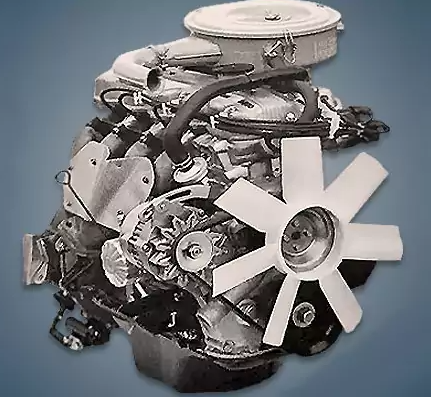
The 4G52 and 4G54 engines are part of the 4G5 family.
The engine was mounted on:
- Mitsubishi Jeep in 1975- 1998.
Specifications
| Production years | 1975-1998 |
| Displacement, cc | 2384 |
| Fuel system | carburetor |
| Power output, hp | 110 |
| Torque output, Nm | 200 |
| Cylinder block | cast iron R4 |
| Block head | aluminum 8v |
| Cylinder bore, mm | 88 |
| Piston stroke, mm | 98 |
| Compression ratio | 8.0 |
| Features | no |
| Hydraulic lifters | no |
| Timing drive | chain |
| Phase regulator | no |
| Turbocharging | no |
| Recommended engine oil | 5W-40 |
| Engine oil capacity, liter | 4.9 |
| Fuel type | petrol |
| Euro standards | EURO 0 |
| Fuel consumption, L/100 km (for Mitsubishi Jeep 1982) — city — highway — combined |
12.5 8.8 10.6 |
| Engine lifespan, km | ~400 000 |
| Weight, kg | 190 |
Disadvantages of the Mitsubishi 4G53 engine
High mileage is intended by the power unit’s straightforward and dependable design;
However, you must realize that everything is challenging when it comes to spare parts for such an engine;
The majority of this motor’s issues are connected in some way to carburetor malfunctions;
After about 250,000 kilometers, timing chain components might need maintenance;
There are no hydraulic lifters, and the valve clearances need to be adjusted on a regular basis.