
From 1999 to 2007, a Japanese plant produced the 2.0-liter Mitsubishi 4G94 engine, which was fitted to several models before being sold to Chinese businesses in 2008. There were two versions of this unit available: DOHC with GDI direct injection and SOHC with MPI multipoint injection system.
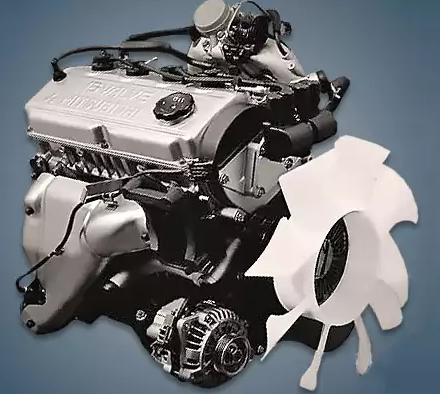
The 2.0-liter 4G94 engine is the biggest in the Mitsubishi 4G9 family. The installed crankshaft with a piston stroke of 95.8 mm allowed for the achievement of this volume, even though the cylinder diameter only increased by 0.5 mm.
Hydraulic lifters were installed on the motor, removing the need to continuously modify valve clearances.
The engines 4G91, 4G92, and 4G93 are also part of the 4G9 family.
The engine was mounted on:
- Mitsubishi Galant EA in 2000 – 2006;
- Mitsubishi Lancer CS in 2000 – 2007;
- Mitsubishi Pajero Pinin H67 in 1999 – 2007;
- Hawtai Santa Fe in 2009 – 2015.
Specifications
| Production years | 1999-2007 |
| Displacement, cc | 1999 |
| Fuel system | injector (MPI SOHC) direct injection (GDI DOHC) |
| Power output, hp | 125 (MPI SOHC) 145 (GDI DOHC) |
| Torque output, Nm | 176 (MPI SOHC) 191 (GDI DOHC) |
| Cylinder block | cast iron R4 |
| Block head | aluminum 16v |
| Cylinder bore, mm | 81.5 |
| Piston stroke, mm | 95.8 |
| Compression ratio | 9.5 (MPI SOHC) 11.0 (GDI DOHC) |
| Features | no |
| Hydraulic lifters | yes |
| Timing drive | belt |
| Phase regulator | no |
| Turbocharging | no |
| Recommended engine oil | 5W-30 |
| Engine oil capacity, liter | 3.8 |
| Fuel type | petrol |
| Euro standards | EURO 3 (MPI SOHC) EURO 4 (GDI DOHC) |
| Fuel consumption, L/100 km (for Mitsubishi Galant GDI 2002) — city — highway — combined |
10.5 6.3 7.8 |
| Engine lifespan, km | ~300 000 |
| Weight, kg | 150 |
Disadvantages of the Mitsubishi 4G94 engine
Engine models with GDi are problematic and have strict fuel quality requirements;
Hydraulic lifter failure is a common breakdown of all modifications; if the engine frequently stalls when hot, the idle control valve probably needs to be replaced;
Rings typically lie down and the oil burn starts after 100–150 thousand kilometers; the risk of insert rotation rises as a result of the system’s decreased oil pressure.