
The 1.4-liter Ford 1.4 TDCi or DLD-414 diesel engines were manufactured between 2002 and 2014 and were fitted to the Mazda 2 under the Y404 index, as well as models like the Fiesta and Fusion. This diesel engine is identical to the Peugeot 1.4 HDi and was developed in collaboration with the Peugeot-Citroen company.
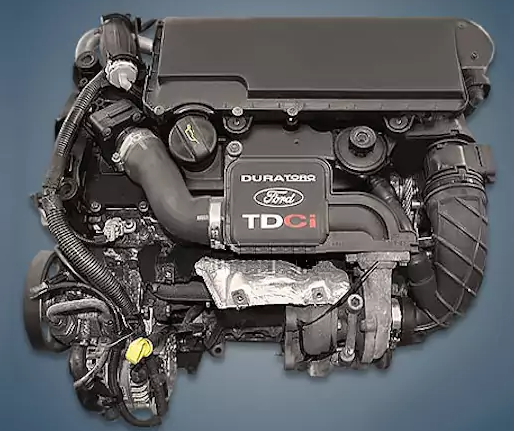
Ford 1.4 TDCi engine design
Ford’s smallest 1.4-liter diesel engine made its debut on the Fiesta model in 2002. The unit has an analog of the Peugeot 1.4 HDi and was developed as part of a joint venture with Peugeot-Citroen. This motor’s design consists of an aluminum cylinder block with cast-iron liners, an aluminum 8-valve head with hydraulic lifters, and a timing belt drive. Additionally, every version has a standard BorgWarner KP35 turbocharger without variable geometry or an intercooler, as well as a Siemens Common Rail fuel system with a SID 802 or 804 high pressure fuel pump.
2008 saw the introduction of an upgraded 1.4 TDCi diesel engine on the new Fiesta model, which was able to meet Euro 5 environmental standards because of a particulate filter and a start-stop system.
Specifications
| Production years | 2002-2014 |
| Displacement, cc | 1399 |
| Fuel system | Common Rail |
| Power output, hp | 68 – 70 |
| Torque output, Nm | 160 |
| Cylinder block | aluminum R4 |
| Block head | aluminum 8v |
| Cylinder bore, mm | 73.7 |
| Piston stroke, mm | 82 |
| Compression ratio | 17.9 |
| Hydraulic lifters | yes |
| Timing drive | belt |
| Fuel type | diesel |
| Euro standards | EURO 3/4 |
| Engine lifespan, km | ~300 000 |
Ford vehicles use four different versions of these power units. Additionally, the Mazda 2 had this diesel engine installed under its own index, Y404.
| F6JA (68 hp / 160 Nm / Euro 3) | Ford Fiesta Mk5, Fusion Mk1 |
| F6JB (68 hp / 160 Nm / Euro 4) | Ford Fiesta Mk5, Fusion Mk1 |
| F6JD (70 hp / 160 Nm / Euro 4) | Ford Fiesta Mk6 |
| KVJA (70 hp / 160 Nm / Euro 5) | Ford Fiesta Mk6 |
| Y404 (68 hp / 160 Nm / Euro 3/4) | Mazda 2 DY, 2 DE |
Disadvantages of the Ford 1.4 TDCi engine
The owners’ primary issues stem from the Siemens fuel system’s unpredictability: the high pressure fuel pump’s PCV and VCV control valves or piezo injectors frequently malfunction. Additionally, it is best to keep a supply of fuel in the tank because this system is terrified of airing.
An impressive amount of oil is frequently used during a run of more than 100,000 to 150,000 kilometers because the crankcase ventilation system’s membrane deteriorates along with the valve cover. Critical wear of the cylinder-piston group may also be the cause of the oil burn.
The remaining issues are common to many diesel engines and will be compiled into a single list: lubricant and antifreeze leaks frequently occur, the EGR valve clogs quickly, the crankshaft damper pulley does not function well, and refractory washers under the nozzles frequently burn out.