
From 2006 to 2010, Volkswagen produced the 1.6-liter 16-valve 1.6 BTS engine, which was fitted to popular models like the Polo, Fabia, Ibiza, and Cordoba. This motor has a timing chain and an aluminum cylinder block, which set it apart from its predecessors.
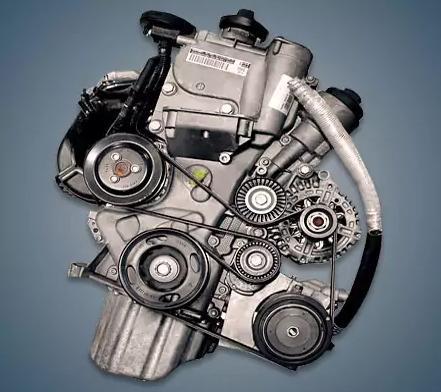
ABU, AEE, AUS, AZD, BCB, BTS, CFNA, and CFNB are all part of the EA111-1.6 series.
Specifications
| Production years | 2006-2010 |
| Displacement, cc | 1598 |
| Fuel system | injector |
| Power output, hp | 105 |
| Torque output, Nm | 153 |
| Cylinder block | aluminum R4 |
| Block head | aluminum 16v |
| Cylinder bore, mm | 76.5 |
| Piston stroke, mm | 86.9 |
| Compression ratio | 10.5 |
| Features | DOHC |
| Hydraulic lifters | yes |
| Timing drive | chain |
| Phase regulator | on the intake shaft |
| Turbocharging | no |
| Recommended engine oil | 5W-30 |
| Engine oil capacity, liter | 3.6 |
| Fuel type | petrol |
| Euro standards | EURO 4 |
| Fuel consumption, L/100 km (for VW Polo 4 2006) — city — highway — combined |
9.5 5.1 6.9 |
| Engine lifespan, km | ~300 000 |
The engine was installed on:
- Volkswagen CrossPolo in 2006 – 2008;
- Volkswagen Polo 4 (9N) in 2006 – 2009;
- Seat Cordoba 2 (6L) in 2006 – 2008;
- Seat Ibiza 3 (6L) in 2006 – 2008; Ibiza 4 (6J) in 2008 – 2010;
- Skoda Fabia 2 (5J) in 2007 – 2010;
- Skoda Roomster 1 (5J) in 2006 – 2010.
Disadvantages of the VW BTS engine
This motor is regarded as dependable; numerous reviews with excellent mileage can be found on the network.
However, the oil burner’s worn rings and caps are a common source of complaints from owners.
We advise using forged pistons in place of the original ones when performing a significant overhaul.
Floating engine speed is frequently caused by a dirty throttle or EGR valve.
The so-called cooling tee is a common location for antifreeze leaks.
Additionally, timing chains, lambda probes, and ignition coils don’t have the best resources.