
Popular models like the Volkswagen Passat, Skoda Superb, and Audi A3 are equipped with the 2.0-liter VW CRLB or Passat B8 2.0 TDI diesel engine, which has been manufactured since 2012. One of the earliest models in the transverse EA288 series was this motor.
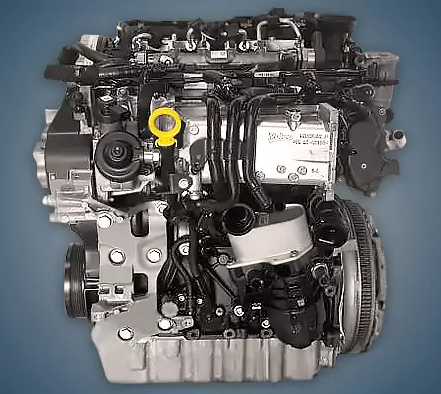
DCXA, CRLB, CRMB, DETA, DBGC, DFGA, DFBA, and DAUA are additional models in the EA288 series.
Specifications
| Production years | since 2012 |
| Displacement, cc | 1968 |
| Fuel system | Common Rail |
| Power output, hp | 150 |
| Torque output, Nm | 340 |
| Cylinder block | cast iron R4 |
| Block head | aluminum 16v |
| Cylinder bore, mm | 81 |
| Piston stroke, mm | 95.5 |
| Compression ratio | 16.2 |
| Features | DOHC |
| Hydraulic lifters | yes |
| Timing drive | belt |
| Phase regulator | yes |
| Turbocharging | Mahle BM70B |
| Recommended engine oil | 5W-30 |
| Engine oil capacity, liter | 4.6 |
| Fuel type | diesel |
| Euro standards | EURO 5/6 |
| Fuel consumption, L/100 km (for Volkswagen Passat 2015) — city — highway — combined |
5.4 4.2 4.6 |
| Engine lifespan, km | ~320 000 |
The engine was installed on:
- Audi A3 3 (8V) in 2012 – 2018;
- Skoda Superb 3 (3V) since 2015;
- Volkswagen Golf 7 (5G) in 2012 – 2020;
- Volkswagen Golf Sportsvan 1 (AM) in 2014 – 2017;
- Volkswagen Passat B8 (3G) in 2014 – 2019.
Disadvantages of the VW CRLB engine
Bad fuel cannot be tolerated by fuel equipment, and repairs are costly;
The EGR valve rapidly clogs with soot, just like in any contemporary diesel engine;
Regulations state that the belt must be replaced every 210,000 kilometers, but the pump frequently fails sooner;
If you don’t use oil approved by VW 507.00, the particulate filter won’t last very long.