
The fourth generation of the Golf model and platform vehicles from Audi and Seat were equipped with the 1.6-liter 8-valve Volkswagen BFQ engine, which was manufactured between 2002 and 2010. This Euro 4 power unit has an electric throttle, mass air flow sensor, EGR, and a secondary air pump.
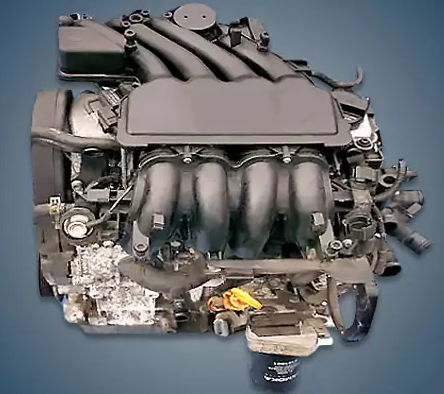
AEH, AHL, AKL, ALZ, ANA, APF, ARM, AVU, BFQ, BGU, BSE, and BSF are all part of the EA113-1.6 series.
Specifications
| Production years | 2002-2010 |
| Displacement, cc | 1595 |
| Fuel system | injector |
| Power output, hp | 102 |
| Torque output, Nm | 148 |
| Cylinder block | aluminum R4 |
| Block head | aluminum 8v |
| Cylinder bore, mm | 81 |
| Piston stroke, mm | 77.4 |
| Compression ratio | 10.3 – 10.5 |
| Features | EGR, EPC |
| Hydraulic lifters | yes |
| Timing drive | belt |
| Phase regulator | no |
| Turbocharging | no |
| Recommended engine oil | 5W-30 |
| Engine oil capacity, liter | 4.5 |
| Fuel type | petrol |
| Euro standards | EURO 4 |
| Fuel consumption, L/100 km (for VW Golf 4 Variant 2004) — city — highway — combined |
10.7 5.8 7.6 |
| Engine lifespan, km | ~340 000 |
The engine was installed on:
- Audi A3 1 (8L) in 2002 – 2003;
- Seat Leon 1 (1M) in 2005 – 2006;
- Skoda Octavia 1 (1U) in 2002 – 2010;
- Volkswagen Bora 1 (1J) in 2002 – 2005;
- Volkswagen Golf 4 (1J) in 2002 – 2006.
Disadvantages of the VW BFQ engine
The motor is dependable and has a lot of resources, but it only becomes problematic when the mileage is high;
Unstable operation is caused by a cracked coil or a clogged fuel pump;
Additionally frequent are wedge intake manifold flaps and air leaks.
This series of engines frequently burst the exhaust manifold between three and four cylinders;
Rings lie, caps deteriorate, and oil burns develop after 200,000 kilometers.