
Only the Transporter minibus, Caravelle, and Multivan of the fifth generation were equipped with the 2.0-liter AXA engine, also known as the Volkswagen T5 2.0 gasoline, which was manufactured between 2003 and 2015. Although this power unit is thought to be very dependable, the car’s dynamics are only average.
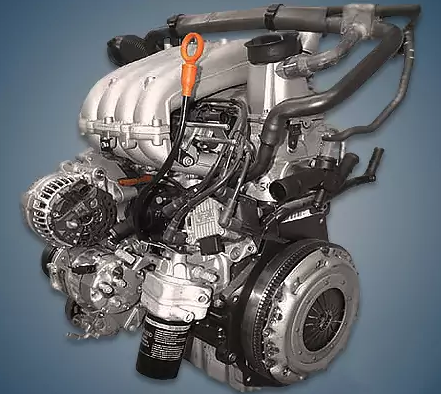
APK, AQY, AXA, AZJ, AZM, ALT, and BSX are all part of the EA113-2.0 series.
Specifications
| Production years | 2003-2015 |
| Displacement, cc | 1984 |
| Fuel system | injector |
| Power output, hp | 115 |
| Torque output, Nm | 170 |
| Cylinder block | cast iron R4 |
| Block head | aluminum 8v |
| Cylinder bore, mm | 82.5 |
| Piston stroke, mm | 92.8 |
| Compression ratio | 10.3 |
| Features | SOHC |
| Hydraulic lifters | yes |
| Timing drive | belt |
| Phase regulator | no |
| Turbocharging | no |
| Recommended engine oil | 5W-30 |
| Engine oil capacity, liter | 5.0 |
| Fuel type | petrol |
| Euro standards | EURO 4/5 |
| Fuel consumption, L/100 km (for VW Transporter T5 2010) — city — highway — combined |
13.6 8.6 10.4 |
| Engine lifespan, km | ~400 000 |
The engine was installed on:
- Volkswagen Caravelle T5 (7H) in 2003 – 2015;
- Volkswagen Multivan T5 (7H) in 2003 – 2015;
- Volkswagen Transporter T5 (7H) in 2003 – 2015.
Disadvantages of the VW AXA engine
The minibus receives mediocre dynamics from this unit, despite its simplicity and dependability.
Crankshaft position sensor malfunctions, coolant temperature sensor contamination, and idle speed controller contamination are the primary issues.
Keep an eye on the timing belt’s condition because the valves typically bend when it breaks.
The membrane of the crankcase ventilation system is another one of this motor’s weak points.
Rings are a common cause of oil consumption at extremely high mileage.