
The fourth Golf, the Bora sedan, the updated Beetle model, and the Skoda Octavia all had the 2.0-liter gasoline Volkswagen AZJ 8v engine, which was manufactured between 2001 and 2010. This power unit’s balance shaft sets it apart from other motors in its family.
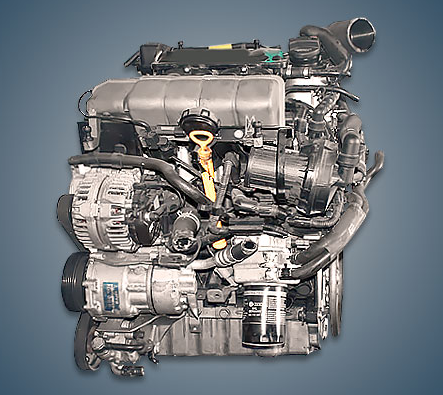
APK, AQY, AXA, AZJ, AZM, ALT, and BSX are all part of the EA113-2.0 series.
Specifications
| Production years | 2001-2010 |
| Displacement, cc | 1984 |
| Fuel system | injector |
| Power output, hp | 115 – 116 |
| Torque output, Nm | 172 |
| Cylinder block | cast iron R4 |
| Block head | aluminum 8v |
| Cylinder bore, mm | 82.5 |
| Piston stroke, mm | 92.8 |
| Compression ratio | 10.3 – 10.5 |
| Features | SOHC |
| Hydraulic lifters | yes |
| Timing drive | belt |
| Phase regulator | no |
| Turbocharging | no |
| Recommended engine oil | 5W-30 |
| Engine oil capacity, liter | 4.0 |
| Fuel type | petrol |
| Euro standards | EURO 3/4 |
| Fuel consumption, L/100 km (for VW New Beetle 2002) — city — highway — combined |
11.8 6.9 8.7 |
| Engine lifespan, km | ~375 000 |
The engine was installed on:
- Skoda Octavia 1 (1U) in 2002 – 2004;
- Volkswagen Beetle 1 (9C) in 2001 – 2010;
- Volkswagen Bora 1 (1J) in 2001 – 2005;
- Volkswagen Golf 4 (1J) in 2001 – 2006.
Disadvantages of the VW AZJ engine
This power unit is incredibly dependable, and the majority of its malfunctions are minor ones.
Ignition system issues are the most common reason for calling a car service.
Throttle contamination is typically the cause of the motor’s erratic operation.
Clogged crankcase ventilation is the primary cause of oil leaks.
The oil starts to burn after 250,000 kilometers when the caps wear out or the rings fall to the ground.