
From 2005 to 2010, the company produced the 2.0-liter Volkswagen BVY 2.0 FSI engine, which was fitted to several Seat vehicles as well as well-known models like the Passat, Touran, and Octavia. It is well known that this direct fuel injection unit cannot withstand severe frosts.
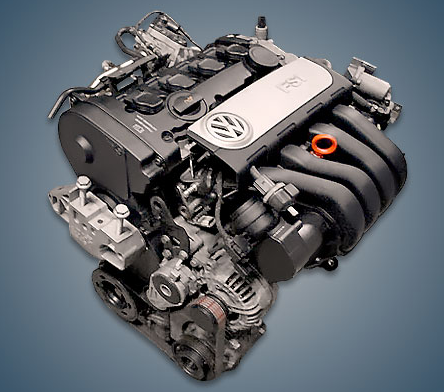
BVY and BVZ are part of the EA113-FSI series.
Specifications
| Production years | 2005-2010 |
| Displacement, cc | 1984 |
| Fuel system | direct injection |
| Power output, hp | 150 |
| Torque output, Nm | 200 |
| Cylinder block | aluminum R4 |
| Block head | aluminum 16v |
| Cylinder bore, mm | 82.5 |
| Piston stroke, mm | 92.8 |
| Compression ratio | 11.5 |
| Features | DOHC |
| Hydraulic lifters | yes |
| Timing drive | chain & belt |
| Phase regulator | on the intake shaft |
| Turbocharging | no |
| Recommended engine oil | 5W-30 |
| Engine oil capacity, liter | 4.6 |
| Fuel type | petrol |
| Euro standards | EURO 4 |
| Fuel consumption, L/100 km (for VW Passat 2007) — city — highway — combined |
12.0 6.7 8.7 |
| Engine lifespan, km | ~250 000 |
The engine was installed on:
- Audi A3 2 (8P) in 2005 – 2006;
- Skoda Octavia 2 (1Z) in 2005 – 2008;
- Seat Altea 1 (5P) in 2005 – 2009;
- Seat Leon 2 (1P) in 2005 – 2009;
- Seat Toledo 3 (5P) in 2005 – 2009;
- Volkswagen Eos 1 (1F) in 2006 – 2008;
- Volkswagen Golf 5 (1K) in 2005 – 2008;
- Volkswagen Golf Plus 1 (5M) in 2005 – 2008;
- Volkswagen Jetta 5 (1K) in 2005 – 2008;
- Volkswagen Passat B6 (3C) in 2005 – 2010;
- Volkswagen Touran 1 (1T) in 2005 – 2006.
Disadvantages of the VW BVY engine
This engine has trouble operating in frost and dislikes low temperatures.
The advanced direct injection system has very high fuel quality requirements.
Here, the intake valves soon become overgrown with soot and lose their ability to close firmly.
The durability of the injection pump drive pusher and the phase regulator at the intake is the same.
Oil consumption appears and thin oil scraper rings can be found up to 100,000 kilometers away.