
Only the fifth generation of the highly sought-after Passat and Skoda Superb were equipped with the 2.0-liter Volkswagen AZM engine, which was manufactured at the company’s facility between 2000 and 2008. The longitudinal arrangement of this power unit sets it apart from other units in the series.
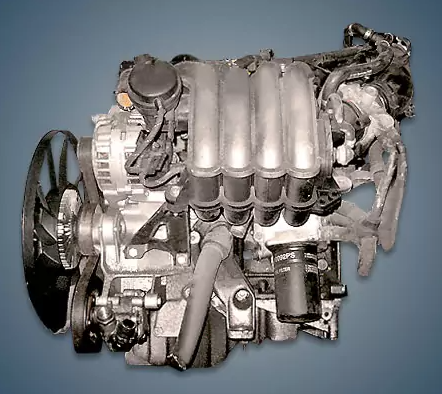
APK, AQY, AXA, AZJ, AZM, ALT, and BSX are all part of the EA113-2.0 series.
Specifications
| Production years | 2000-2008 |
| Displacement, cc | 1984 |
| Fuel system | injector |
| Power output, hp | 115 |
| Torque output, Nm | 172 |
| Cylinder block | cast iron R4 |
| Block head | aluminum 8v |
| Cylinder bore, mm | 82.5 |
| Piston stroke, mm | 92.8 |
| Compression ratio | 10.3 |
| Features | SOHC |
| Hydraulic lifters | yes |
| Timing drive | belt |
| Phase regulator | no |
| Turbocharging | no |
| Recommended engine oil | 5W-30 |
| Engine oil capacity, liter | 3.5 |
| Fuel type | petrol |
| Euro standards | EURO 4 |
| Fuel consumption, L/100 km (for VW Passat 2002) — city — highway — combined |
11.8 6.3 8.3 |
| Engine lifespan, km | ~400 000 |
The engine was installed on:
- Skoda Superb 1 (3U) in 2001 – 2008;
- Volkswagen Passat B5 (3B) in 2000 – 2005.
Disadvantages of the VW AZM engine
The motor is thought to be extremely dependable, and its owners are only concerned about minor issues.
The ignition system is in some way connected to the majority of this engine’s issues.
Additionally, electrical malfunctions are common; the idle speed controller, coolant temperature sensor, and crankshaft position sensor are particularly problematic.
The power unit’s crankcase ventilation system is another vulnerability.
An oil burn typically starts on long runs as a result of wear on the rings and caps.