
Only two models—the VW Passat B5 co-platform and the Audi A4 in the rear of the B5—were equipped with the 1.6-liter 8-valve Volkswagen ARM engine, which was manufactured between 1999 and 2000. This Euro 3 unit lacks an EGR valve, has a mechanical throttle drive, and a traditional mass air flow sensor.
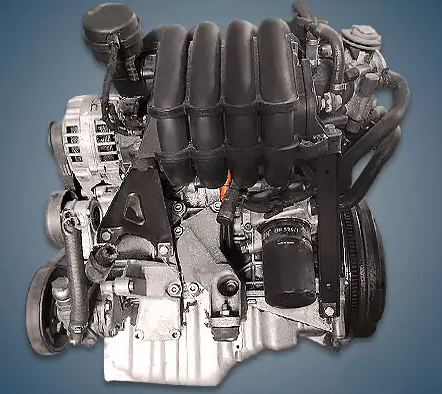
AEH, AHL, AKL, ALZ, ANA, APF, ARM, AVU, BFQ, BGU, BSE, and BSF are all part of the EA113-1.6 series.
Specifications
| Production years | 1999-2000 |
| Displacement, cc | 1595 |
| Fuel system | injector |
| Power output, hp | 101 |
| Torque output, Nm | 145 |
| Cylinder block | aluminum R4 |
| Block head | aluminum 8v |
| Cylinder bore, mm | 81 |
| Piston stroke, mm | 77.4 |
| Compression ratio | 10.2 |
| Features | SOHC |
| Hydraulic lifters | yes |
| Timing drive | belt |
| Phase regulator | no |
| Turbocharging | no |
| Recommended engine oil | 5W-40 (approval: VW 502 00 or VW 505 00) |
| Engine oil capacity, liter | 4.5 |
| Fuel type | petrol |
| Euro standards | EURO 3 |
| Fuel consumption, L/100 km (for VW Passat B5 1999) — city — highway — combined |
11.4 6.2 7.8 |
| Engine lifespan, km | ~330 000 |
The engine was installed on:
- A4 B5 (8D) in 1999 – 2000;
- Volkswagen Passat B5 (3B) in 1999 – 2000.
Disadvantages of the VW ARM engine
Breakdowns happen at high mileage, and this is a very dependable and resourceful unit.
The fuel pump or fuel pressure regulator is to blame for the power drop.
Additionally, air leaks or malfunctions in the mass air flow sensor could be the source of unstable operation.
Here, the low reliability of the intake’s geometry-changing mechanism is different.
The engine starts using oil after 200,000 kilometers because of wear on the rings and caps.