
The Volkswagen BAG 1.6 FSI, a 1.6-liter gasoline engine, was manufactured between 2003 and 2006 and was fitted to the first Touran, the fifth generation Golf model, and the Audi A3 in the rear of the 8P. Improved FSI engine versions swiftly replaced this unit.
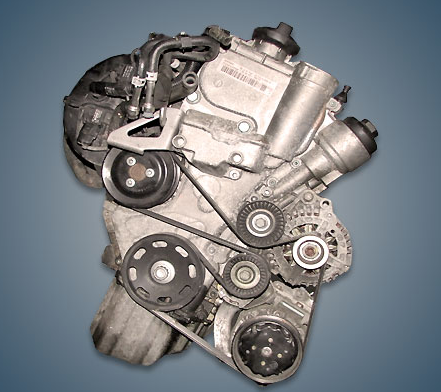
ARR, BKG, BAD, BAG, and BLF are all part of the EA111-FSI series.
Specifications
| Production years | 2003-2006 |
| Displacement, cc | 1598 |
| Fuel system | direct injection |
| Power output, hp | 115 |
| Torque output, Nm | 155 |
| Cylinder block | aluminum R4 |
| Block head | aluminum 16v |
| Cylinder bore, mm | 76.5 |
| Piston stroke, mm | 86.9 |
| Compression ratio | 12.0 |
| Features | DOHC |
| Hydraulic lifters | yes |
| Timing drive | chain |
| Phase regulator | on the intake shaft |
| Turbocharging | no |
| Recommended engine oil | 5W-30 |
| Engine oil capacity, liter | 3.6 |
| Fuel type | petrol |
| Euro standards | EURO 4 |
| Fuel consumption, L/100 km (for VW Golf 2004) — city — highway — combined |
9.1 5.2 6.4 |
| Engine lifespan, km | ~240 000 |
The engine was installed on:
- Audi A3 2 (8P) in 2003 – 2006;
- Volkswagen Golf 5 (1K) in 2003 – 2006;
- Volkswagen Touran 1 (1T) in 2003 – 2006.
Disadvantages of the VW BAG engine
This engine is thought to be erratic and challenging to diagnose and fix.
Here, soot quickly grows over the throttle assembly, EGR valve, and intake valves.
After parking in gear, this very short-lived timing chain can jump.
A nitrogen oxide sensor, ignition coils, and a phase regulator make up a basic resource.
Rings frequently lie down and show signs of oil consumption after 100,000 kilometers of running.