
From 2004 to 2008, the company produced the 1.6-liter Volkswagen BLF 1.6 FSI engine, which was fitted to several well-known models, including the Golf 5, Jetta 5, Touran, and Passat B6. Additionally, the Skoda Octavia frequently has this direct injection engine under the hood.
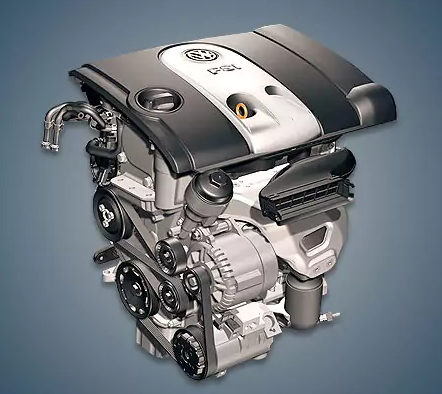
ARR, BKG, BAD, BAG, and BLF are all part of the EA111-FSI series.
Specifications
| Production years | 2004-2008 |
| Displacement, cc | 1598 |
| Fuel system | direct injection |
| Power output, hp | 116 |
| Torque output, Nm | 155 |
| Cylinder block | aluminum R4 |
| Block head | aluminum 16v |
| Cylinder bore, mm | 76.5 |
| Piston stroke, mm | 86.9 |
| Compression ratio | 12.0 |
| Features | DOHC |
| Hydraulic lifters | yes |
| Timing drive | chain |
| Phase regulator | on the intake shaft |
| Turbocharging | no |
| Recommended engine oil | 5W-30 |
| Engine oil capacity, liter | 3.6 |
| Fuel type | petrol |
| Euro standards | EURO 4 |
| Fuel consumption, L/100 km (for VW Jetta 2008) — city — highway — combined |
9.6 5.5 7.0 |
| Engine lifespan, km | ~250 000 |
The engine was installed on:
- Audi A3 2 (8P) in 2004 – 2007;
- Skoda Octavia 2 (1Z) in 2004 – 2008;
- Volkswagen Eos 1 (1F) in 2006 – 2007;
- Volkswagen Golf 5 (1K) in 2004 – 2007;
- Volkswagen Jetta 5 (1K) in 2005 – 2007;
- Volkswagen Passat B6 (3C) in 2005 – 2008;
- Volkswagen Touran 1 (1T) in 2004 – 2006.
Disadvantages of the VW BLF engine
Owners of vehicles with these engines frequently lament how difficult it is to start them in cold weather.
The intake valves, throttle, and EGR valve remain in place due to carbon formation.
The timing chain may jump after parking in gear because it stretches rapidly.
Phase regulators, thermostats, and ignition coils also have limited resources.
Rings frequently lie down after 100,000 kilometers of running, and an oil burn starts.