What Does Code P0068 Mean?
DTC P0068 indicates a detected discrepancy between the input signals from the Manifold Absolute Pressure (MAP) sensor or Mass Airflow (MAF) sensor and the Throttle Position Sensor (TPS). The Engine Control Module (ECM), also known as the Powertrain Control Module (PCM), continuously monitors these critical sensors to ensure their readings are logically consistent with each other and with current engine operating conditions. The ECM expects a predictable correlation between the amount of air entering the engine (measured by MAP/MAF) and the throttle blade’s position (measured by TPS). For example, at idle, the TPS should indicate a near-closed throttle, and the MAP sensor should report high engine vacuum (low pressure), while the MAF sensor reports minimal airflow. Conversely, during wide-open throttle (WOT) acceleration, the TPS should indicate a fully open throttle, the MAP sensor should report atmospheric pressure (low vacuum), and the MAF sensor should report maximum airflow. If the ECM detects that these sensor signals deviate beyond a calibrated threshold for a specified period, indicating an illogical relationship, it will set the P0068 code and illuminate the Malfunction Indicator Lamp (MIL). This issue directly affects the engine’s ability to accurately calculate engine load, fuel delivery, ignition timing, and potentially transmission shift points.
Common Symptoms
- Illuminated Check Engine Light (MIL)
- Rough or erratic idle quality
- Engine hesitation or stumble during acceleration
- Reduced engine power or sluggish performance
- Poor fuel economy
- Engine stalling, particularly at idle or when coming to a stop
- Difficulty starting the engine
- Unintended or delayed transmission shifts (secondary effect due to incorrect load calculation)
What Causes the Code P0068?
- Vacuum leaks: Leaks in the intake manifold, vacuum hoses, PCV system, brake booster, or throttle body gaskets can cause unmetered air to enter the engine, leading to an incorrect MAP sensor reading relative to the throttle position.
- Faulty Manifold Absolute Pressure (MAP) sensor: An internal electrical fault or contamination can cause the MAP sensor to report inaccurate manifold pressure values to the ECM.
- Faulty Mass Airflow (MAF) sensor: A dirty, contaminated, or failed MAF sensor can incorrectly measure the volume of air entering the engine, creating a mismatch with the TPS reading.
- Faulty Throttle Position Sensor (TPS): An internal fault, wear, or damaged wiring can cause the TPS to send inaccurate or erratic throttle angle signals to the ECM. This often manifests as voltage dropouts or spikes during throttle movement.
- Dirty or sticking throttle body: Carbon buildup around the throttle plate can prevent it from fully closing or opening smoothly, leading to incorrect idle air or an inaccurate TPS reading.
- Wiring harness or connector issues: Open circuits, short circuits, or high resistance in the wiring or connectors for the MAP, MAF, or TPS sensors can cause intermittent or continuous incorrect signal transmission.
- Exhaust restrictions: While less common, a severely restricted exhaust system (e.g., clogged catalytic converter) can cause elevated back pressure, affecting engine vacuum and thus MAP sensor readings, creating a correlation issue.
- ECM/PCM malfunction: Although rare, an internal fault within the ECM/PCM that affects sensor signal processing or correlation logic can trigger this code.
How to Diagnose and Troubleshoot
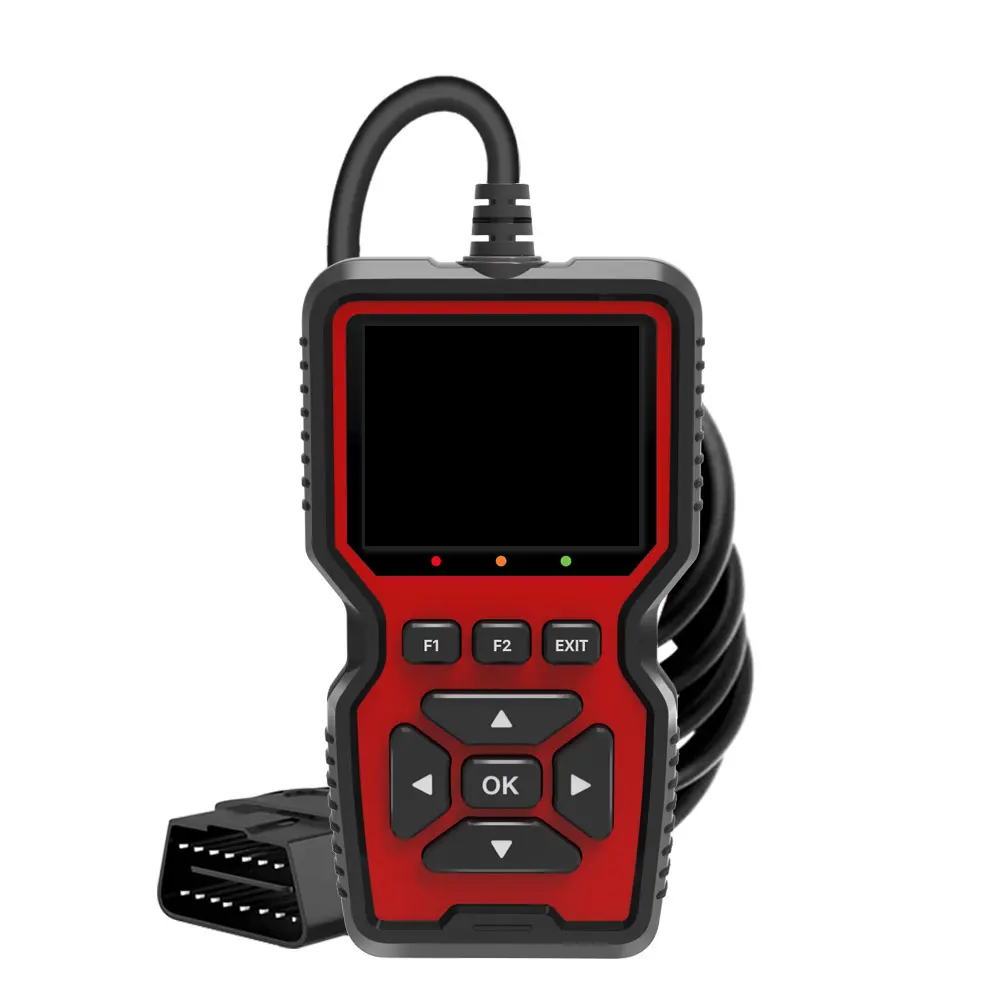
Diagnosing P0068 requires a methodical approach, utilizing an OBD-II scanner with live data capabilities and a digital multimeter (DMM).
- Visual Inspection: Begin by thoroughly inspecting all vacuum lines, intake manifold gaskets, the PCV system, and the throttle body for any signs of cracks, leaks, or loose connections. Examine the electrical connectors and wiring harnesses for the MAP, MAF, and TPS sensors for corrosion, fraying, or damage. Ensure the throttle body is clean and the throttle plate moves freely without binding.
- OBD-II Scanner Live Data Analysis:
- Connect an advanced OBD-II scanner and monitor the following PIDs simultaneously: MAP Sensor (kPa or inHg), MAF Sensor (g/s), and Throttle Position Sensor (%).
- At idle: With the engine at operating temperature, observe the readings. TPS should be near 0% (closed throttle), MAP should indicate high vacuum (typically 20-35 kPa or 6-10 inHg), and MAF should show low airflow (e.g., 2-6 g/s, depending on engine size).
- During acceleration: Slowly depress the accelerator pedal. The TPS percentage should smoothly increase, MAP pressure should rise (vacuum decreases), and MAF airflow should increase proportionally. Look for any erratic jumps, drops, or stickiness in any of the sensor readings.
- At Wide Open Throttle (WOT): Ensure TPS reaches near 100%, MAP approaches atmospheric pressure (e.g., 95-101 kPa), and MAF registers maximum airflow for the engine.
- Deceleration: Observe how the sensors return to idle values, looking for delays or inconsistencies.
- Perform a vacuum leak test using a smoke machine if a vacuum leak is suspected but not visually apparent.
- Digital Multimeter (DMM) Testing:
- Verify Reference Voltage (Vref): With the ignition ON and engine OFF (KOEO), backprobe the Vref wire at each sensor connector (MAP, MAF, TPS). Expect approximately 5 volts. If Vref is absent or incorrect, inspect the wiring back to the ECM.
- Test Sensor Signal Voltage:
- MAP Sensor: Backprobe the signal wire. Voltage should typically be high at KOEO (atmospheric pressure) and drop significantly as vacuum increases at idle (e.g., 4.5V KOEO, 1.0-1.8V at idle).
- MAF Sensor: This can be trickier as some output frequency. If it outputs voltage, it should increase with engine RPM/airflow. Consult service data for expected voltage ranges.
- TPS Sensor: Backprobe the signal wire. Voltage should smoothly increase from approximately 0.5-1.0 volts at closed throttle to 4.5-5.0 volts at WOT. Slowly open and close the throttle while watching the DMM for any sudden drops, spikes, or dead spots in the voltage output. This is crucial for detecting a faulty TPS.
- Check Wiring Integrity: With the battery disconnected, test for continuity, shorts to ground, and shorts to power on all sensor signal, power, and ground wires. Check for excessive resistance in the ground circuit.
- Component Swapping (as a last resort): If specific sensor readings are consistently out of range after thorough testing, consider temporarily swapping a suspected faulty sensor with a known good one, if easily accessible and cost-effective, to confirm diagnosis before purchasing a new part.
Recommended Repairs and Solutions
Once the root cause of P0068 has been accurately identified through diagnosis, the following repairs are typically recommended:
- Repair Vacuum Leaks: This is one of the most common culprits. Replace any cracked or deteriorated vacuum hoses, intake manifold gaskets, throttle body gaskets, PCV valve, or other components found to be leaking. Ensure all intake tubing clamps are tight.
- Replace Faulty Sensors:
- MAP Sensor: If DMM tests or live data indicate the MAP sensor is reading inaccurately or erratically, replace it with a new, OEM-quality unit.
- MAF Sensor: If the MAF sensor is contaminated, carefully clean it with a dedicated MAF sensor cleaner. If cleaning does not resolve the issue, or if internal failure is confirmed, replace the sensor.
- TPS Sensor: If testing reveals erratic voltage output, flat spots, or an incorrect voltage range, replace the TPS. On many modern vehicles, the TPS is integrated into the throttle body assembly, requiring replacement of the entire throttle body.
- Clean Throttle Body: If carbon buildup is found on the throttle plate or within the throttle bore, thoroughly clean the throttle body using a specialized throttle body cleaner. Ensure the throttle plate moves freely without sticking. After cleaning, a throttle body relearn procedure may be necessary on some vehicles.
- Repair Wiring/Connectors: Repair or replace any damaged, corroded, or frayed wiring and connectors. Ensure all terminals have a tight, secure fit.
- Address Exhaust Restrictions: If an exhaust restriction was identified, diagnose and repair the specific restriction, such as replacing a clogged catalytic converter or repairing a crushed exhaust pipe.
- ECM/PCM Reprogramming/Replacement: Only consider this as a final resort after all other potential causes have been thoroughly investigated and ruled out. An ECM replacement often requires programming specific to the vehicle’s VIN.
After any repair, clear the DTCs from the ECM and perform a drive cycle to verify the repair and ensure the P0068 code does not return.